 Synvolve Solutions
A logistics chatbot is an AI-powered tool that automates order processing, connects with major shipping carriers (FedEx, UPS, DHL, USPS), and integrates with leading CRMs like Salesforce, Zoho, or HubSpot. Modern logistics chatbots handle order intake, waybill generation, and shipment tracking automatically—delivering real-time notifications via WhatsApp, Slack, and other platforms. By reducing manual data entry and speeding up status updates, a logistics chatbot streamlines operations, minimizes errors, and improves customer experience, all while meeting data privacy standards like GDPR and CCPA.
What Is a Logistics Chatbot and What Problems Does It Solve?
A logistics chatbot automates repetitive shipping, order management, and delivery tasks. Integrated with messaging platforms like WhatsApp, Facebook Messenger, Slack, or Microsoft Teams, it provides instant, 24/7 support to customers and teams without the need for live agents. By automating routine queries and workflows, a logistics chatbot reduces response times, cuts human error, and enhances customer satisfaction.
Core Functions of a Logistics Chatbot
Key functions include:
- Automated order processing and tracking
- Instant shipping quotes and delivery estimates
- Real-time shipment status notifications (shipped, in transit, delivered)
- Managing returns and generating return labels
- Answering FAQs on shipping policies and carrier options
Most logistics providers face a high volume of routine queries—like “Where’s my package?” Automating these frees agents to focus on complex issues. Integrated with carriers (FedEx, UPS, DHL, USPS) and CRMs (Salesforce, Zoho, HubSpot), logistics chatbots are essential for efficient, accurate, and customer-friendly supply chains.
Logistics Chatbot Integration with Major Shipping Carriers
Seamless integration with shipping carriers like FedEx, UPS, DHL, and USPS allows a logistics chatbot to automate critical workflows and reduce manual errors. For example, waybill and shipping label generation can be done directly in the chatbot by pulling order data from your CRM, eliminating double entry and ensuring accuracy.
Carrier APIs provide real-time delivery statuses, instantly available to agents and customers via preferred messaging apps. Automated, branded notifications keep customers informed and reduce support workload. Return requests are streamlined: the chatbot initiates the return with the carrier and tracks each stage, all within the same chat thread.
Key integration benefits:
- Create/edit waybills or labels in the chatbot—no carrier portal logins required
- Automated tracking and proactive status updates
- Instant tracking number generation and sharing
- End-to-end automation of returns and reshipments, with full chat history
- Carrier-specific info: pickup locations, rates, delivery schedules
- Bulk status updates for multiple orders synced from your CRM
These integrations typically cut order processing times by 30–50% and reduce shipping errors, leading to more satisfied customers and efficient operations.
CRM-Integrated Logistics Chatbot: Automating Orders & Real-Time Reporting
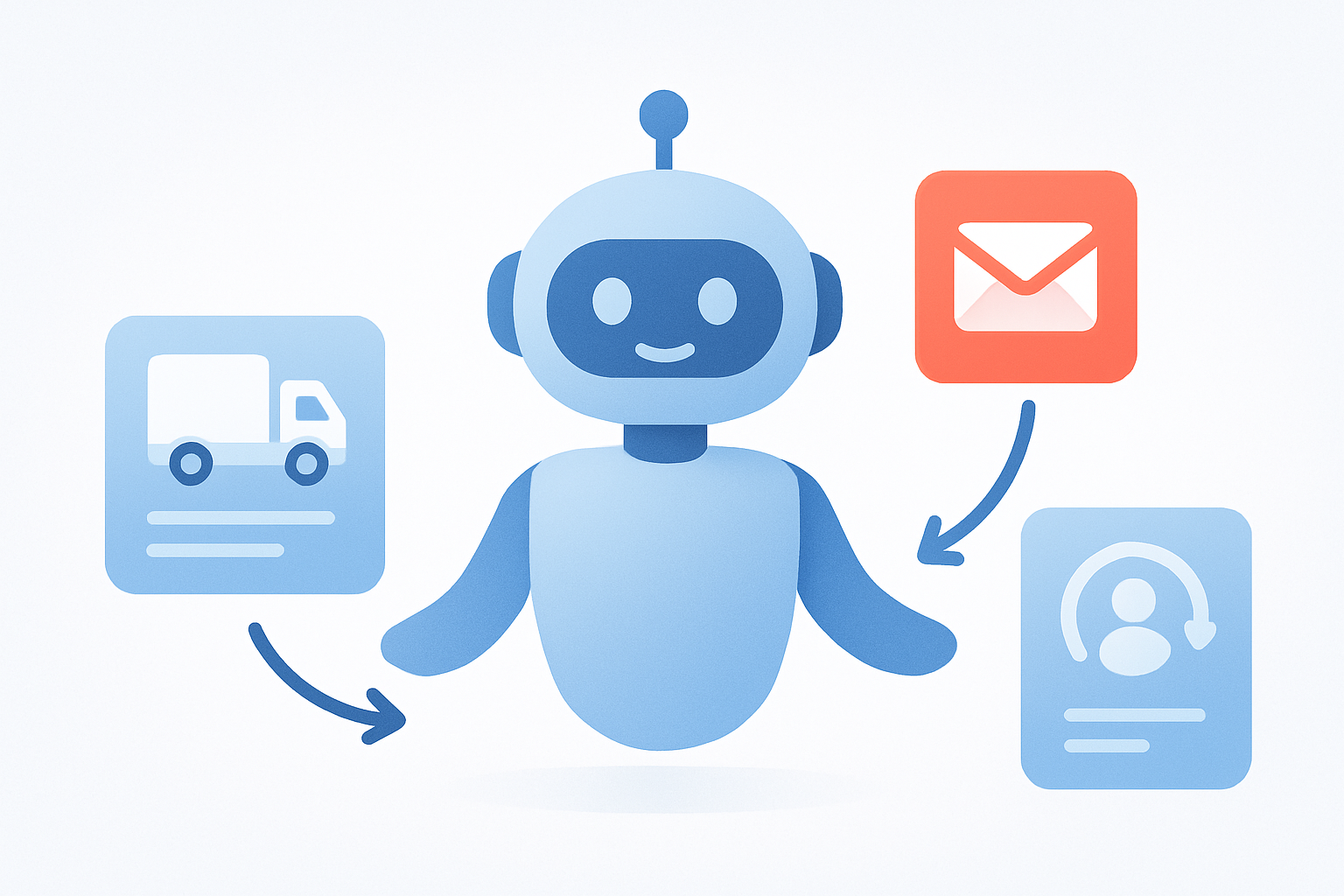
True logistics automation requires syncing your logistics chatbot with your CRM. Integration with Salesforce, Zoho CRM, or HubSpot enables full order automation, real-time updates, and hands-free reporting.
Here’s how it works: the chatbot captures new orders, updates or creates customer records in your CRM, syncs order data, and pushes delivery status changes instantly. This reduces errors and accelerates processing.
Why Integrate with Salesforce, Zoho CRM, or HubSpot?
- Instant Status Updates: Order status changes sync immediately with your CRM.
- Centralized Data: All order and customer details in one place for easy analysis.
- Automated Reporting: Generate reports on order volume, channel efficiency, and performance.
- Reduced Manual Work: The chatbot handles data entry, freeing agents’ time.
- SLA & KPI Monitoring: Automatically track SLAs and KPIs using real-time data.
- Custom Workflows: Configure the chatbot and CRM to match your logistics processes.
Step-by-Step Workflow: From Order to Delivery with a Logistics Chatbot
Here’s how an automated order-to-delivery process works:
- Order Placement:
Customers place orders via your website or messaging channels. The chatbot captures details and logs them in your CRM.
- Shipping Label Generation:
The chatbot generates a shipping label with a carrier (FedEx, UPS, DHL, USPS) using CRM data, shares the tracking number instantly.
- Real-Time Status Updates:
Delivery statuses are updated in the CRM and customer chat. Customers get instant notifications as orders progress.
- Full Order Visibility:
Agents track every order in the CRM, proactively managing exceptions like delays or failed deliveries.
Example: Handling a Return Request
A customer starts a return via the chatbot, which guides them through the process, auto-generates a return waybill, and sends instructions. All updates sync with your CRM, and agents are alerted as needed. This automation reduces errors and speeds up returns.
Business Benefits: Measurable Results and Enhanced Efficiency
Integrating a logistics chatbot delivers clear improvements:
- Order processing time drops by 30–50% compared to manual workflows.
- Automation nearly eliminates data entry and status errors.
- Customers receive real-time shipping updates, boosting satisfaction.
- Staff can handle more orders with fewer agents, reducing costs.
Manual Processing vs. Logistics Chatbot Automation
| Criteria | Manual Processing | Chatbot Automation | Business Impact |
|---|---|---|---|
| Avg. Order Processing Time | 6–10 min/order | 2–4 min/order | 30–50% time savings |
| Error Rate | 3–5% of orders | ~0% | Fewer costly mistakes |
| Notification Speed | 10–30 minutes | Under 1 minute | Improved customer loyalty |
| Staff Workload | 1 agent = ~30 orders/day | 1 agent = 75–100 orders/day | Scale without increasing headcount |
| Processing Cost | Higher | Lower | Reduced operational expenses |
By automating order processing, shipping carrier integrations, CRM syncing, and instant communications via popular channels, businesses can deliver faster, error-free service and scale efficiently. The result: measurable time and cost savings, improved accuracy, and an outstanding customer experience.
Custom Logistics Chatbot Development: Features and Advantages
Off-the-shelf chatbots often can’t handle the complex workflows of logistics companies. Custom logistics chatbot development lets you match your business logic, support multi-shipment orders, dynamic shipping rates, and specialized integrations—whether with carriers, warehouse systems, or CRMs.
Custom solutions offer:
- Deep integration with unique carrier APIs or in-house tools
- Support for complex workflows (returns, multi-warehouse routing)
- Full control over automation and data security (GDPR/CCPA compliant)
- Scalability for growing order volumes
Choose custom development if you need maximum flexibility, robust automation, and strict control over logistics data.
Implementation Checklist for Deploying a Logistics Chatbot
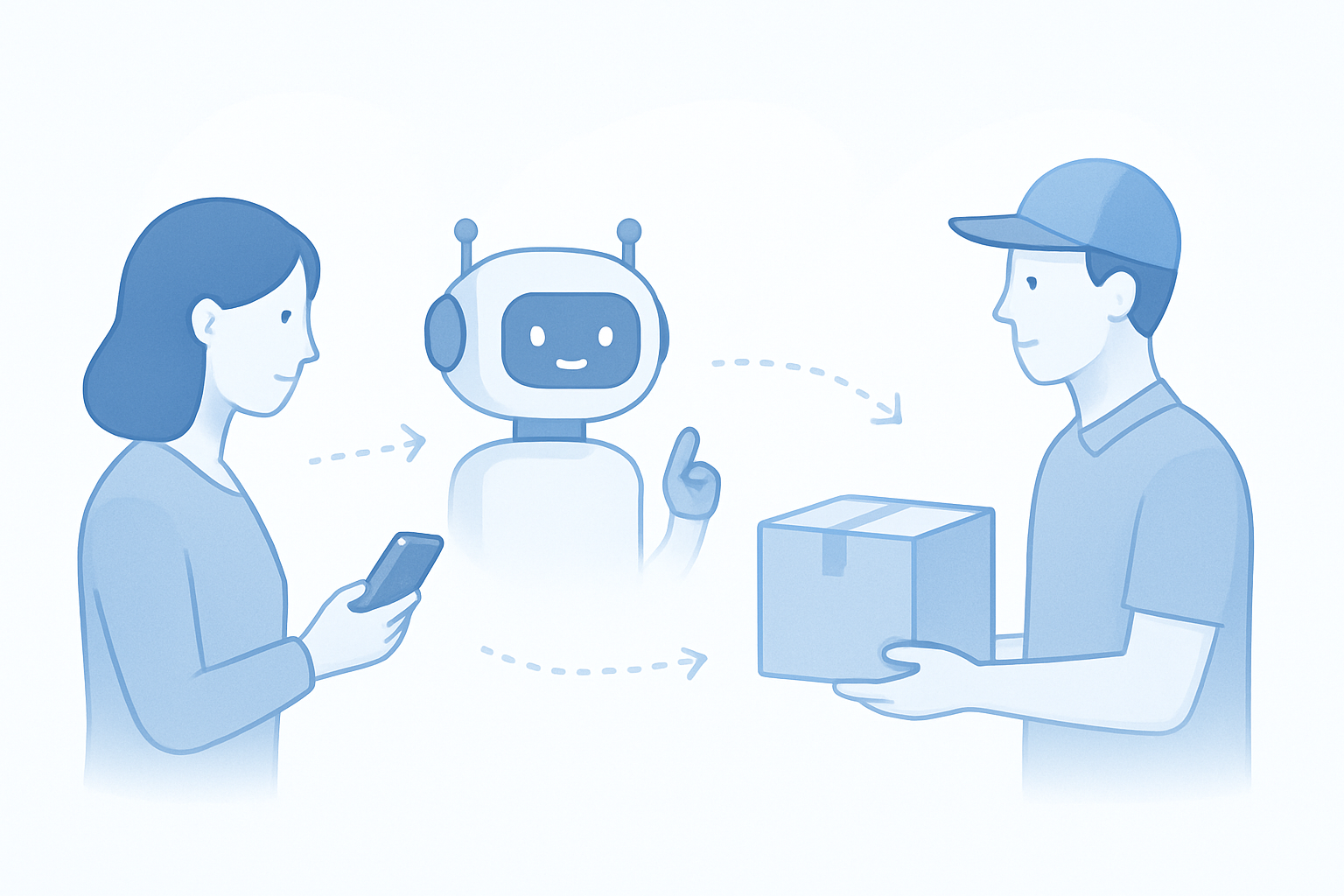
For a smooth rollout, follow this checklist:
- Audit Operations: Map your processes, identify bottlenecks, and list integration points (CRMs, carrier APIs, messaging channels).
- Select Integration Platforms: Decide which CRMs, carriers, and communication channels the chatbot will connect with.
- Prepare Specs: Document business logic, API endpoints, security needs, and scalability requirements.
- Controlled Testing: Pilot the chatbot, monitor interactions, and refine workflows.
- Train Your Team: Provide clear instructions and documentation for agents.
- Go Live & Support: Launch, monitor performance, and set up rapid support procedures.
Best Practices for Ongoing Support
Review logs and feedback regularly to keep your logistics chatbot effective. Update flows as your business evolves, add new integrations, and automate more processes to improve efficiency.
Key Takeaways in a Minute
- Integrating a logistics chatbot with shipping carriers (FedEx, UPS, DHL, USPS) automates waybill generation, tracking, and notifications.
- Connecting with CRMs (Salesforce, Zoho, HubSpot) enables hands-off order creation, live updates, and automated reporting.
- Automating logistics workflows reduces processing times by 30–50% and nearly eliminates manual errors.
- Every order and return is logged securely in your CRM and messaging channels, ensuring oversight and a top-tier customer experience.
Ready to streamline logistics and accelerate order processing? Consider a modern logistics chatbot with seamless carrier and CRM integration. Learn more at Synvolve Solutions chatbot development services.
Frequently Asked Questions
What is AI-powered logistics?
AI-powered logistics uses artificial intelligence—like chatbots and automation tools—to streamline shipping and delivery operations, reducing manual work and improving accuracy.
What are chatbots in e-commerce?
E-commerce chatbots are digital assistants that interact with customers via messaging platforms or websites, handling orders, tracking, and support to boost efficiency and satisfaction.
How much does an AI customer service bot cost?
Costs range from $500 to $10,000+ depending on complexity and integrations. SaaS solutions start at $50–$500/month; custom bots for logistics or CRM integration cost more.
What robots are used in logistics?
Logistics robots include automated guided vehicles (AGVs), robotic arms, drones, and autonomous mobile robots (AMRs) for tasks like sorting, packing, and warehouse navigation.
Is AI replacing logistics?
AI isn’t replacing logistics but transforming it—automating tasks, optimizing routes, and providing real-time insights. Human expertise remains essential for complex decisions.