 Synvolve Solutions
If you’re looking for ways to streamline your wholesale operations in 2026, an AI assistant for wholesale could be your game-changer. By automating tasks like order processing, invoicing, inventory management, customer communication, and demand forecasting, these assistants integrate with platforms like Salesforce, NetSuite, or SAP to reduce manual errors, speed up workflows, and let your team focus on high-value work. Companies using AI assistants for wholesale consistently report increased efficiency and responsiveness—vital advantages in the competitive North American and UK markets. This article explores how AI assistants and AI agents differ, why the distinction matters, and what trends are shaping wholesale automation.
What Is an AI Assistant? How Do AI Agents Differ?
An AI assistant is a software tool that automates routine tasks, manages data, and supports decision-making within defined business scenarios. In wholesale, an AI assistant for wholesale can process orders, handle customer communication, manage inventory, and sync data across CRM/ERP systems like Salesforce, NetSuite, or SAP. For instance, it might approve pricing requests based on company rules or recommend products to B2B sales reps.
AI agents, meanwhile, operate with greater autonomy. They can initiate actions, adapt to changing conditions, and learn from historical data. In wholesale, AI agents might oversee supply chains, optimize purchasing, or proactively flag contract risks.
Types of AI Assistants
- Rule-Based: Rely on set logic—ideal for structured tasks like invoice validation.
- Machine Learning-Based: Adapt to new scenarios, handling complex processes like demand forecasting.
- Hybrid: Combine both for flexibility and reliability.
Custom AI assistants are tailored to your workflows and integrate deeply with your systems. Off-the-shelf solutions are generic and less customizable. For multi-channel wholesale, custom AI automation typically delivers 1.5–2x greater efficiency due to better business alignment and integration.
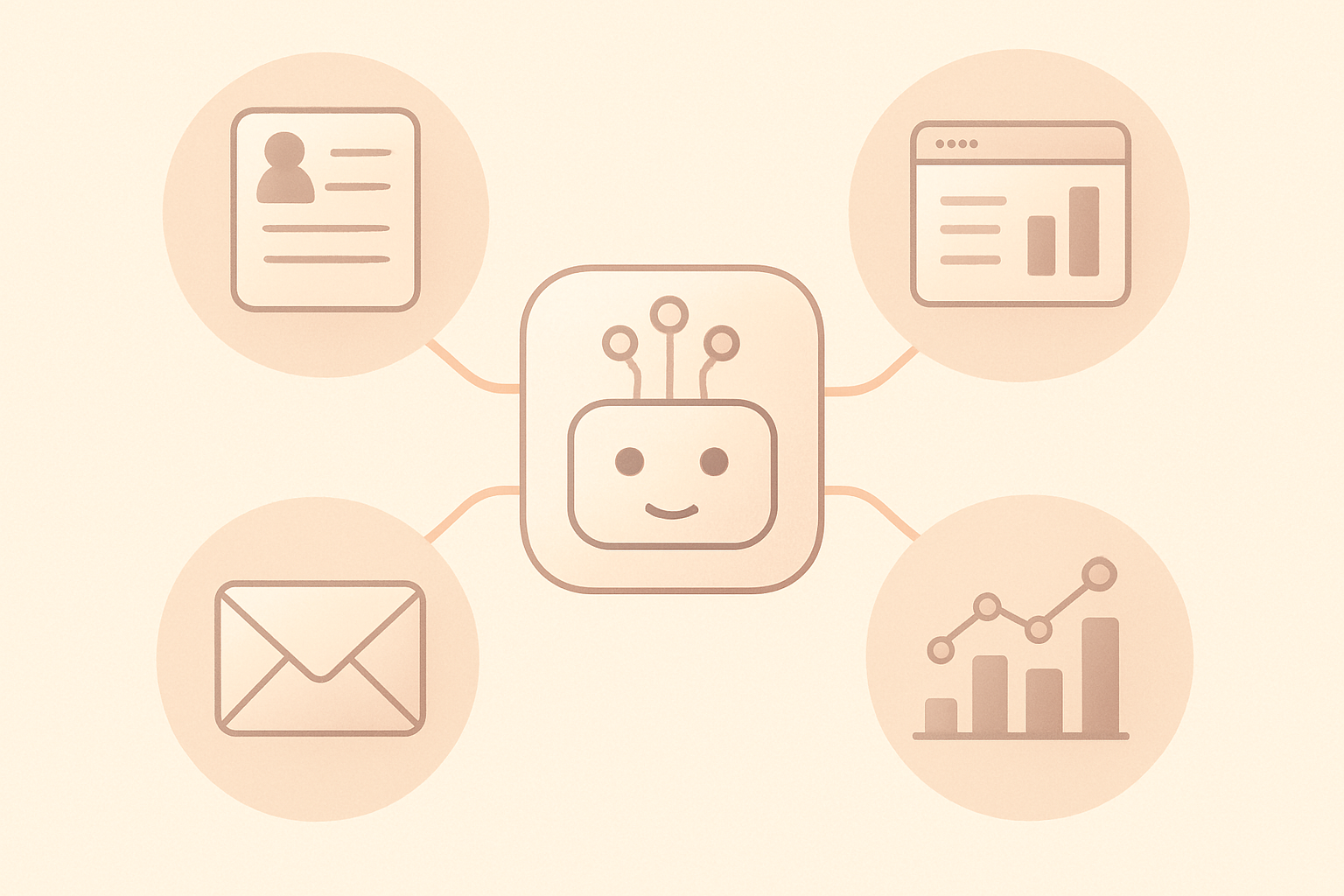
AI Assistant Trends in Wholesale (2026 Outlook)
AI assistants for wholesale are evolving from simple automation tools to deeply integrated business solutions. Wholesale companies are adopting AI to reduce manual tasks and boost efficiency. Research shows that AI agents in B2B wholesale can cut order and invoice processing times by up to 60%, depending on integration depth.
Modern AI assistants connect ERP, CRM, and SaaS platforms—Salesforce, NetSuite, SAP, QuickBooks, Xero—enabling seamless automation across the order-to-invoice lifecycle. Next-generation AI solutions analyze real-time data, forecast demand, trigger repeat sales, and optimize inventory, delivering measurable business impact.
Integration in B2B Workflows
Standard features now include:
- Automated invoice creation and delivery
- Real-time payment tracking
- Dynamic inventory reconciliation
- E-signature workflows via DocuSign or Adobe Sign
With multichannel SaaS integrations, AI-powered wholesale management can handle inquiries from chat, email, CRM, and web portals in one process. Omnichannel capabilities and secure cloud integration are essential, especially with regulations like GDPR and CCPA. Custom AI agents can personalize outreach, automate follow-ups, and suggest optimal reorder points.
For more on key workflows, see AI assistant for business.
5 Key Processes Automated by an AI Assistant in Wholesale
By 2026, AI assistants for wholesale will automate:
- Inquiry Handling: Captures and classifies incoming requests, auto-responds, or routes them to the right manager—cutting response times from hours to minutes.
- Inventory Management: Keeps inventory synced between warehouse and CRM/ERP, alerts for low/excess stock, and reduces supply chain issues.
- Invoice Automation: Generates and validates invoices, integrates with accounting platforms, and accelerates the sales cycle.
- Sales Analytics: Analyzes order history, forecasts demand, and flags anomalies for better purchasing and assortment decisions.
- Customer Support: Chatbots handle routine inquiries 24/7, connect with CRM for personalized responses, and auto-create support tickets.
For best practices, see AI assistant solutions.
B2B Automation in Action
- Auto-distributing leads among sales reps based on workload and deal history
- Integrating with shipping and e-commerce platforms for automated label generation and tracking
- Sending automated reminders for expiring invoices or new products
- Cross-checking invoices to prevent duplicates
- Generating real-time dashboards for inventory and sales
AI automation in wholesale trade lightens manual workloads and boosts transparency.
Custom AI Assistants vs. Off-the-Shelf Solutions
Choosing between custom and off-the-shelf AI solutions for wholesale is about more than cost—it’s about fit and future value. Custom AI assistants integrate deeply with your ERP/CRM and reflect your unique business processes, automating everything from inventory management to multi-channel sales.
Off-the-shelf SaaS tools are quick to deploy but limited in handling complex pricing, order flows, or specialized needs. Custom AI agents allow for bespoke algorithms, personalized sales funnels, and automation aligned with your policies.
Custom development also means better data governance—your data stays within your infrastructure, reducing security risks and supporting compliance.
ROI of Custom AI Agents
Custom AI agents reduce manual labor, errors, and processing times. For example, automating 60% of order handling can deliver ROI in 6–12 months, with fewer errors and higher client satisfaction.
| Criterion | Custom AI Agent Development | Leading SaaS Solutions | Expert Commentary |
|---|---|---|---|
| ERP/CRM Integration | Deep, API-level & business logic | Basic, via standard connectors | Tailored to your company’s processes |
| Workflow Flexibility | Unlimited, covers any scenario | Predefined, limited scenarios | Supports unique business logic |
| Data Security | Full control, on-premise/private cloud | Vendor-managed cloud | Aligns with internal security policies |
| Upfront Cost | Higher initially, lower long-term | Lower initially, higher at scale | ROI typically within 6–12 months |
| Scalability | Flexible, scales with business | Limited by pricing tiers | No artificial limits on growth |
| Support & Modifications | Responsive, tailored to your needs | Standardized, vendor-controlled | Changes on request, not in a support queue |
For a deeper comparison, visit AI agent for business.
{{IMAGE_N}}
Implementing an AI Assistant: Wholesale Checklist
- Map Your Processes: Identify high-impact, repetitive tasks for automation.
- Select the Right AI Assistant: Decide between off-the-shelf or custom solutions, especially if deep ERP/CRM integration is needed.
- Choose an Implementation Partner: Look for experience in wholesale automation and relevant integrations. Always request a demo or case study.
- Pilot the Solution: Start with one area (e.g., order processing), track key metrics before and after.
- Integrate With Core Systems: Ensure seamless integration with ERP, CRM, accounting, and document platforms.
- Train Your Team: Provide focused training and clear documentation.
- Measure & Scale: Compare KPIs and expand automation to other processes as you see results.
Real-World Success: Synvolve Solutions
A North American distributor used Synvolve Solutions’ AI assistant for inventory management, integrating with NetSuite and using computer vision to identify stock items. Inventory cycle time dropped from 8 to 4 hours, with a 50% reduction in errors.
Another client automated invoice processing, cutting manual checks by 60% and nearly eliminating missed errors. The project delivered a 170% ROI in the first year.
Both cases used a phased rollout, ensuring no disruption to daily operations and allowing businesses to adopt AI automation smoothly.

Common Pitfalls and How to Avoid Them
- Skipping Process Mapping: Leads to poor automation results. Always map workflows first.
- Choosing Generic Solutions or Inexperienced Vendors: Limits value. Select partners with proven wholesale AI experience.
- Neglecting Training: Undermines adoption. Provide tailored onboarding and user guides.
- Poor Integration: Isolated AI assistants miss real-time data. Ensure robust integration with core systems.
- Ignoring Feedback: Regularly collect user input post-launch to refine and maximize ROI.
Choosing a Custom AI Assistant Partner
Look for a partner with a strong track record in wholesale and B2B automation. Ask for case studies involving order processing, repetitive task automation, or ERP/CRM integration (Salesforce, NetSuite, SAP). Industry knowledge and integration expertise are essential—your AI agent should fit seamlessly within your tech stack.
Clarify service agreements, support, and product roadmap. A good partner will offer clear maintenance plans and a vision for scaling as your business grows.
Key Takeaways
- An AI assistant for wholesale automates core B2B workflows—order handling, inventory, invoicing, analytics, and support.
- Seamless integration with CRM, ERP, and accounting platforms speeds up data exchange and reduces errors.
- Custom solutions deliver tailored automation for your unique processes and multi-channel sales, driving greater efficiency.
- AI-powered wholesale management frees staff from manual work, improves service quality, and supports scalable growth.
For more, visit our business process automation services page.
FAQ
What else can an AI assistant automate in wholesale by 2026?
Advanced demand forecasting, personalized pricing, real-time inventory, automated invoicing, and proactive customer support.
What are the main risks of implementing an AI assistant in wholesale?
Data security, integration complexity, job displacement, and reliance on accurate data. Mitigate with planning, cybersecurity, and staff training.
How do you measure AI assistant effectiveness?
Track KPIs like order speed, error reduction, customer satisfaction, cost savings, and productivity. Regular reviews ensure ongoing value.
What are the steps to implement a custom AI assistant for wholesale?
Map processes, select automation targets, choose a partner, integrate, test, train staff, and monitor for continuous optimization.
Can an AI assistant be scaled to new business areas?
Yes. Modular design and flexible APIs allow expansion without a full rebuild.