 Synvolve Solutions
When it comes to chatbot development for manufacturing companies, the key question is: can chatbots truly streamline operations and reduce errors? The answer is yes. By integrating with leading ERP and CRM systems like SAP, Oracle, or Microsoft Dynamics, a well-designed chatbot can automate order handling, approvals, inventory checks, and document management. Connecting directly to your business management platform, the chatbot processes orders, retrieves reference data, initiates approvals, and keeps your team updated in real time across familiar channels such as Slack, Microsoft Teams, WhatsApp, or web chat. This automation speeds up workflows, increases transparency, and minimizes human mistakes, giving manufacturers better control over critical business processes.
Common Use Cases for Chatbots in Manufacturing Companies
Streamlining Order Processing
A custom chatbot solution can transform how manufacturers handle orders from distributors and clients. By automating order intake and integrating with ERP systems like SAP, Oracle, or Microsoft Dynamics, chatbots provide real-time inventory checks and instant order registration—no manual steps required. Processing times drop from hours to minutes, customers get immediate confirmation and live order updates, and staff gain real-time visibility into every request.
Automating Approvals and Information Requests
Chatbots handle routine employee and partner inquiries about inventory, shipments, logistics, or business data. Approval workflows—such as vacation requests, purchase approvals, or invoice sign-offs—are managed seamlessly via Slack, Microsoft Teams, or WhatsApp, eliminating bottlenecks. Chatbots also automate post-order feedback collection, supporting continuous improvement.
Key benefits:
- 24/7 order intake and processing
- Instant approval of internal requests (vacation, purchasing, schedule changes)
- Immediate responses to information queries (inventory, delivery status, documentation)
- Real-time logistics monitoring, fully integrated with ERP
- Automated feedback collection after order fulfillment
- Live KPI tracking based on current business data
By adopting chatbot development, manufacturing companies can standardize and accelerate key business processes, reduce errors, and lower operational costs—delivering a real competitive edge in today’s digital market.
Integration Scenarios: Chatbots & Leading ERP/CRM Systems — What Can Be Automated
Integrating chatbots with ERP and CRM platforms like SAP, Oracle, Microsoft Dynamics, Salesforce, or NetSuite enables robust business process automation. For example, with a custom chatbot embedded in Slack, Microsoft Teams, WhatsApp, or web chat, a client can submit a new order directly in chat. The chatbot checks product inventory in your ERP, auto-generates the sales order, initiates an approval workflow, and records the outcome—all automatically. Shipment or delivery status updates are processed in real time: as soon as your ERP system registers a change, the chatbot proactively notifies the client in their preferred messenger.
Another valuable use case: automated generation and distribution of invoices, receipts, or reports right after an order is approved—eliminating bottlenecks and reducing processing times from hours to minutes. Managers are freed from repetitive admin work, allowing them to focus on higher-value tasks. For more on the ROI of business process automation chatbots, see our chatbot development analysis.
Example Workflow: Order Approval via Chatbot
Imagine a supplier submits a proposal. Instantly, the chatbot identifies the responsible assignee from your ERP, notifies them in Slack or Teams, collects their decision (approve/reject), records the response in the ERP, and triggers the next workflow stage. The entire process is seamless—no operator involvement, full traceability, and clear audit trails at every step. {{IMAGE_N}}
Synvolve Case Study: Custom Chatbot for Manufacturing with Deep ERP Integration
To illustrate the impact, here’s a real-world example from Synvolve Solutions.
Initial Context & Objectives
A mid-sized manufacturing firm with 200+ employees approached Synvolve Solutions to automate their order processing. Their main challenges: manual handling of 120+ daily requests, approval bottlenecks, and frequent data entry errors in their ERP (SAP, Oracle, or Microsoft Dynamics). The goal: streamline order intake and processing via direct ERP integration, reducing cycle times and errors. The project required handling complex warehouse access, custom approval workflows, and advanced multi-level request routing.
A key aspect of this chatbot development project was deep ERP integration via secure APIs, tailored to the client’s unique processes. Synvolve applied a custom methodology to determine the best integration model for the client’s needs.
For details on our approach, see our chatbot development services.
Implementation Results
After launch, the chatbot reduced order processing time per request by 40% and cut error rates by 30%. The bot synced order status updates with the ERP, triggered team notifications, and initiated approval workflows—automatically. Dealer requests could be processed 24/7, with real-time data transfer into the ERP. The solution also supported custom order distribution logic and scalable architecture for new product lines. This case shows how effective chatbot development can dramatically improve speed and quality in manufacturing business process automation.
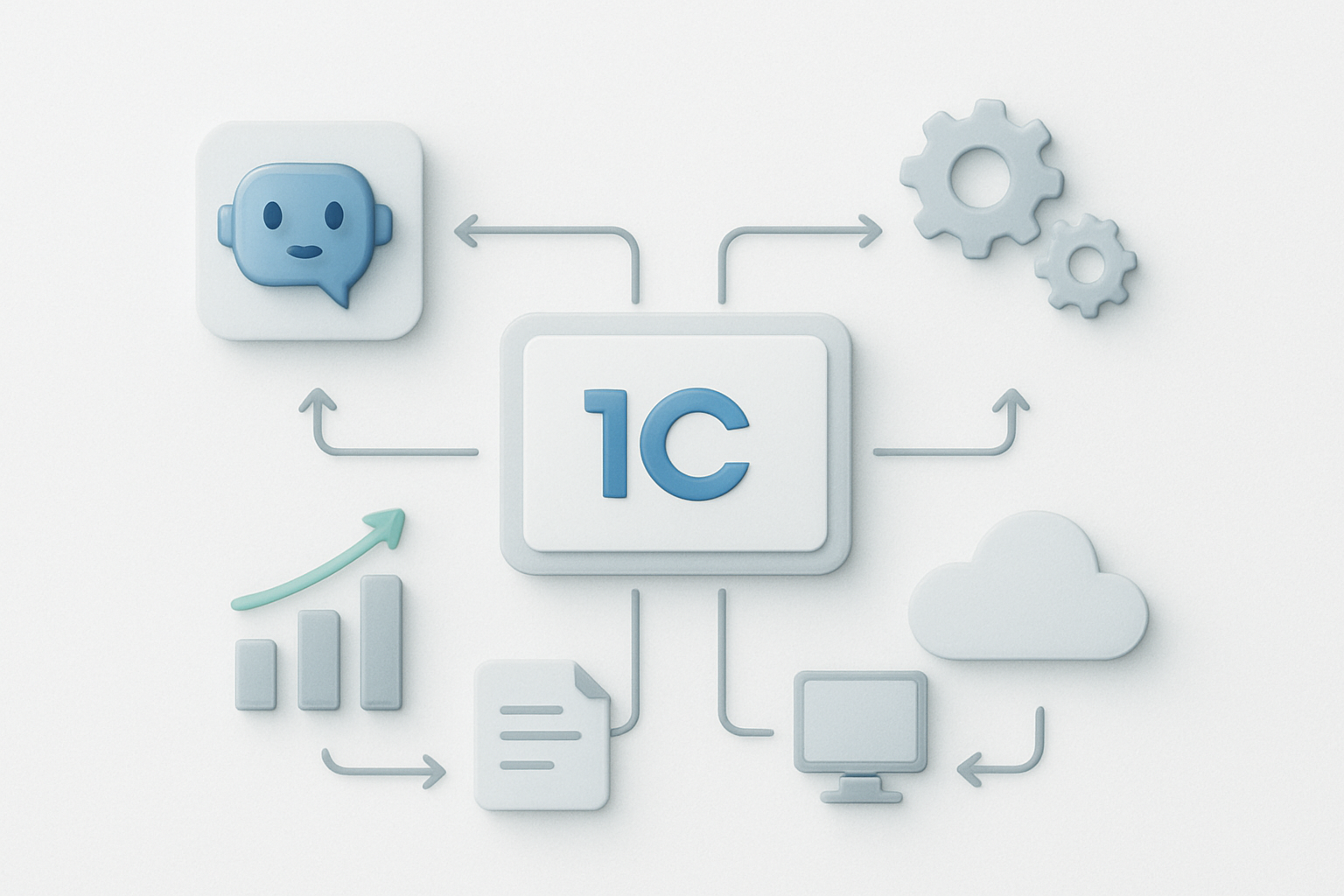
Technical Architecture of Chatbot Integration with ERP/CRM
Custom chatbot solutions connect with business management systems via REST or SOAP APIs, enabling seamless two-way data exchange. This allows the chatbot to retrieve order statuses, inventory levels, invoices, or dispatch details—and write new records directly into your ERP or CRM. AI agents for intent recognition or automated request classification are deployed as independent microservices, enhancing automation and user interactions.
Security and access control meet international compliance standards (GDPR, SOC2, HIPAA where relevant). Access is managed via token-based authentication, IP whitelisting, activity logging, and encrypted HTTPS/TLS connections. Permissions are granular and role-based: for example, a manager sees only their assigned orders, while executives access analytics dashboards.
The architecture is designed for omnichannel support, integrating with Slack, Microsoft Teams, WhatsApp, Telegram, and web chat. Channel selection is tailored to your business processes and user habits. Chatbots can be deployed as modular extensions within your infrastructure or as standalone services with horizontal scaling for high volumes.
Integration Architecture Diagram
Typically, the solution has three layers:
- Chatbot Frontend: User interface across chosen channels.
- API Middleware: REST/SOAP/API integration with ERP/CRM.
- Secure Data Backend: Protected data server managing business information.
Each layer can be scaled independently, ensuring high availability and performance as your business grows.
Key Stages in Chatbot Development for Manufacturing Companies
Here’s a step-by-step checklist for chatbot development tailored for manufacturing, focusing on integration with ERP and CRM platforms like SAP, Oracle, Microsoft Dynamics, or Salesforce.
- Review business processes and set clear implementation goals.
- Map user scenarios and plan integration with your ERP or CRM.
- Develop an MVP chatbot with core capabilities (typically up to 8 weeks).
- Pilot test with key users and fix any critical issues.
- Train staff for smooth adoption.
- Set up ongoing monitoring, collect feedback, and optimize workflows.
This approach ensures your business process automation chatbot fits seamlessly into your digital ecosystem and delivers real benefits—whether you need enterprise chatbot integration, chatbot integration with ERP, or a chatbot for manufacturing companies across Slack, Microsoft Teams, WhatsApp, or web chat. {{IMAGE_N}}
Measurable Outcomes: Efficiency Gains and Error Reduction
With a custom chatbot solution integrated with ERP systems like SAP, Oracle, or Microsoft Dynamics, organizations see clear, measurable improvements.
Request processing times typically decrease by at least 40%. For instance, a task that took 10 minutes can now be completed in 6 minutes—or less—thanks to automation. Error rates in document management drop by about 30% after deploying business process automation chatbots, as manual data entry and human mistakes are reduced.
Staff get instant access to real-time data, improving both chatbot effectiveness and overall process control. Managers benefit from transparent reporting on all operations, simplifying audits and strengthening accountability. For manufacturing, these improvements mean faster order fulfillment, less downtime, and analytics that clearly demonstrate the ROI of chatbot development and enterprise chatbot integration.
Cost, Support, and Choosing Between Custom and Off-the-Shelf Chatbots
Let’s look at the financial and operational considerations when choosing between custom chatbot development and using a chatbot builder—especially for manufacturing or enterprise scenarios needing robust integrations and automation.
Total cost of ownership (TCO) depends on several factors: the number and depth of integrations with core systems (SAP, Oracle, Microsoft Dynamics, Salesforce, NetSuite), the complexity of conversation scenarios, multi-channel compatibility (Slack, Microsoft Teams, WhatsApp, web chat, Telegram), and compliance with security standards (GDPR, SOC2, HIPAA). Custom chatbot solutions require a higher upfront investment for tailored development and integration, while off-the-shelf builders offer a lower entry price but may lack deep customization, advanced automation, or enterprise-grade integration.
Support models differ as well. With custom chatbot development, businesses get tailored Service Level Agreements (SLAs), ongoing adaptation to business system changes, and the ability to scale or modify the solution as needs evolve. In contrast, chatbot builders offer support limited to standard platform features, with less flexibility for custom enhancements or integration updates.
Custom vs. Off-the-Shelf Chatbot Solutions: Practical Comparison
| Factor | Custom Chatbot Solution | Chatbot Builder Platform | For Complex Integrations |
|---|---|---|---|
| Cost (USD, GBP, EUR) | Higher initial investment | Lower entry cost | Custom is more effective |
| ERP/CRM Integration | Deep, tailored | Limited, template-based | Custom is essential |
| Scalability | Business-driven, flexible | Depends on builder platform | Custom scales better |
| Support & SLA | Personalized, adaptive | Standard, limited | Custom support is critical |
For organizations where chatbot integration with ERP systems is mission-critical—such as manufacturing companies automating their supply chain—the flexibility and long-term value of a custom approach usually outweigh the lower entry costs of generic builders. If your roadmap involves complex workflows, multi-system integrations, or evolving compliance needs, investing in a custom solution ensures your chatbot remains a strategic asset.
Key Takeaways
- Streamline order intake and processing by integrating a chatbot directly with your ERP system (SAP, Oracle, Microsoft Dynamics, NetSuite) to reduce turnaround times and minimize errors.
- Use chatbots for internal approvals—vacation requests, purchase orders, invoice approvals, and reference queries—to lighten your team’s administrative load.
- Implement secure, bidirectional API integrations so your chatbot and business management systems can exchange data safely, with proper access controls and compliance.
- Offer a multichannel experience: deploy your chatbot on Slack, Microsoft Teams, WhatsApp, Telegram, or web chat, based on your team’s habits and business workflow.
When built right, a custom chatbot solution with ERP integration empowers manufacturing companies to move faster, improve accuracy, and cut unnecessary bureaucracy. Ready to automate your business processes? Talk to the experts at Synvolve Solutions—learn more about chatbot development and enterprise chatbot integration for manufacturing on our service page.
Frequently Asked Questions
What business processes can be automated by a chatbot in manufacturing besides order processing?
Chatbots in manufacturing can automate inventory management, internal approvals (vacation requests, purchase orders), production scheduling, equipment maintenance notifications, and customer support queries. This streamlines operations and reduces manual workload across business functions.
How long does it take to develop a chatbot integrated with 1C/BAS for complex scenarios?
Developing a chatbot with deep integration into 1C or BAS for complex scenarios typically takes 2 to 4 months, depending on business process complexity, required integrations, and customization.
What are the advantages of a custom chatbot for manufacturing over a chatbot builder?
A custom chatbot offers tailored automation, deeper ERP integration, and can handle complex manufacturing workflows. Chatbot builders often have limited customization and may not support advanced automation or secure integrations.
How is data security ensured when integrating a chatbot with 1C/BAS?
Data security is ensured through encrypted API connections, strict access controls, and regular security audits. Additional measures may include two-factor authentication and compliance with industry data protection standards.
What support is provided after launching a chatbot for a manufacturing company?
After launch, manufacturing companies typically receive ongoing technical support, performance monitoring, regular updates, and troubleshooting. This ensures the chatbot remains efficient, secure, and adapts to evolving business needs or changes in ERP/CRM systems.