 Synvolve Solutions
If you’re considering chatbot development services for your business, you’re in the right place. Modern chatbots drive efficiency, boost ROI, and can be tailored for secure, compliant use across platforms like WhatsApp, Facebook Messenger, Slack, and Microsoft Teams. Today’s AI-powered bots do more than automate routine tasks—they qualify leads, personalize customer journeys, and integrate with your CRM or ERP, all while meeting regulations such as GDPR and CCPA. This article explores seven proven chatbot solutions that deliver measurable results, showing how both custom and SaaS-based bots save resources, streamline operations, and fit seamlessly into omnichannel strategies.
Chatbot Market Trends & Opportunities: A Global View
Key Use Cases Fueling Chatbot Adoption
In the US, UK, and EU, chatbot development services are rapidly gaining traction as businesses automate processes and offer 24/7 engagement. Companies of all sizes are adopting AI chatbot solutions to improve efficiency and customer service across channels—WhatsApp, Messenger, Slack, Microsoft Teams, and web chat. Typical applications include:
- Retail: Automating sales, sending personalized offers, and handling customer queries.
- Finance: Providing instant account info, payment reminders, and secure transaction support.
- Logistics: Real-time shipment tracking and automated support.
- Professional Services: Appointment scheduling, lead qualification, and SaaS integration.
Why AI-Powered Chatbots Matter
AI chatbots are now essential for companies aiming to reduce response times and deliver seamless experiences at scale. With robust enterprise chatbot integration, these bots go far beyond FAQs:
- Generate and qualify leads, updating sales pipelines automatically.
- Automate document approvals and workflows.
- Deliver personalized recommendations, adapting in real time.
Custom chatbot development is growing fast as businesses demand solutions that fit their unique needs. Key trends include:
- Omnichannel logic: One AI engine for chat, voice, and social platforms.
- Deep personalization: Using data securely for tailored experiences.
- Fast deployment, high flexibility: Expanding features without sacrificing compliance.
- Enterprise integrations: Connecting to business systems while protecting data privacy.
For organizations seeking maximum ROI, bespoke AI chatbot solutions are quickly becoming the standard for digital transformation.
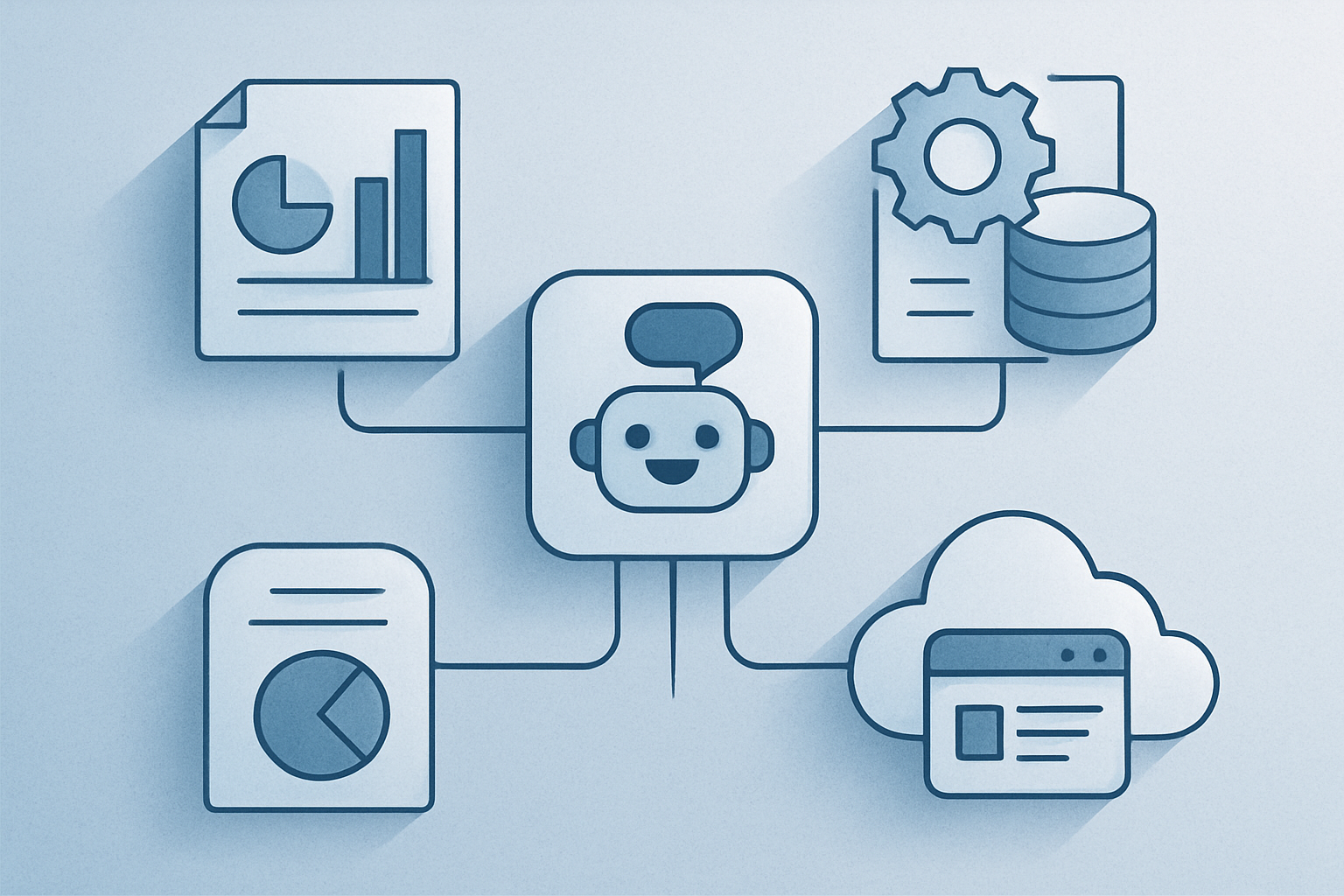
7 Chatbot Success Stories: Business Impact Worldwide
Here’s how chatbot development services are transforming businesses globally, from telecom and retail to healthcare and energy:
- A telecom operator launched a chatbot on WhatsApp and Messenger, reducing call center volume by 40%. The bot handles requests, diagnostics, and outage updates—delivering 24/7 support.
- A government health chatbot processed over 2 million COVID certificate requests, cutting turnaround from three days to 15 minutes, fully compliant with GDPR and CCPA.
- A retail chain integrated an AI chatbot with CRM and loyalty programs. Customers reserve products and get support via Messenger or webchat, with all inquiries syncing to HubSpot. Repeat purchases rose 22%.
- In healthcare, an appointment scheduling chatbot increased booking conversions by 18%, letting patients self-schedule and reducing errors.
- A bank launched an enterprise chatbot for account management. Clients request statements, block cards, and flag accounts—70% of requests are handled automatically.
- A public safety chatbot collects anonymous tips, instantly routing reports into internal systems for faster response and data privacy.
- An energy provider’s notification chatbot, integrated with utility APIs, delivers real-time outage alerts to over 900,000 subscribers, maintaining 99% uptime.
These deployments required deep integration with business processes, from CRM/ERP syncing to automated updates. Leading cases have delivered ROI of 250–400% by reducing manual workload and improving customer experience.
Table: 7 Industry Chatbot Examples
| Chatbot | Industry | Goals | Impact / ROI |
|---|---|---|---|
| Telecom Support Bot | Telecom | Automate support, reduce calls | -40% call volume, 24/7 service |
| Health Authority Bot | GovTech | High-volume processing | 2M+ requests, 15x faster turnaround |
| Retail CRM Bot | Retail | CRM sync, reservations | +22% repeat sales |
| Medical Booking Bot | Healthcare | Automate scheduling | +18% conversions, fewer errors |
| Banking Self-Service | Finance | Account management | 70% of queries resolved by bot |
| Public Safety Bot | Security | Anonymous reporting | Faster response, full automation |
| Energy Alerts Bot | Energy | Mass notifications | 900K+ subscribers, 99% uptime |
{{IMAGE_N}}
AI Chatbots: Business Impact and Key Applications
AI chatbots are more than scripted responders—they understand user intent, analyze conversation history, and learn from every interaction. Unlike traditional bots, AI chatbots handle unstructured queries and adapt to each customer’s style. Top areas for AI chatbot solutions include:
- 24/7 customer support on WhatsApp, Messenger, or webchat
- Automated order intake and scheduling
- Lead qualification and nurturing
- Interactive FAQ and self-service
- Personalized communications via CRM/ERP integration
For example:
- E-commerce: Automate up to 60% of inquiries, freeing agents for complex cases.
- Insurance: Automate claims intake.
- Logistics: Real-time order tracking and notifications.
- Finance: Streamline onboarding and support from application to deal closure.
With enterprise chatbot integration, organizations can track interactions and segment audiences in real time. The ROI of implementing a custom chatbot for business is typically realized within 4–9 months, depending on automation scale and integration depth.
Custom vs. Template Chatbots: What’s Right for Your Business?
When evaluating chatbot development services, it’s important to distinguish between custom AI chatbot solutions and template-based SaaS platforms.
Custom chatbot development is tailored to your business logic, workflows, and integration needs—ideal for complex operations, omnichannel communication, or unique automation. If you need advanced CRM/ERP integration or AI-powered recommendations, a template chatbot won’t suffice.
Template SaaS chatbots (e.g., ManyChat, Intercom, Drift, Zendesk, HubSpot) are great for rapid deployment of basic scenarios: FAQs, lead capture, or scheduling. These can launch in 1–5 days, with pricing from $20 to $150/month. However, customization and enterprise chatbot integration are limited.
For advanced automation, personalized journeys, or unique integrations, a custom chatbot is the best investment. Custom development typically takes 6–12 weeks, with budgets from $3,000 to $25,000+.
Use cases:
- Template chatbots: FAQ automation, bookings, surveys
- Custom chatbots: AI agents, analytics, ERP integration, smart campaigns
Comparison Table: Custom vs. Template Chatbots
| Criteria | Template Chatbot | Custom Development | SaaS with Extensions |
|---|---|---|---|
| Deployment Time | 1–5 days | 6–12 weeks | 1–7 days |
| Cost | $20–$150/month | $3,000–$25,000+ | $40–$200/month |
| Flexibility | Limited | Unlimited | Moderate (platform-dependent) |
| Integrations | Basic (CRM, email, etc.) | Any (API, CRM, ERP) | Expandable via marketplace/apps |
| Scalability | Challenging | Unlimited | May depend on subscription tier |
Choose your approach based on business goals, technical needs, and ROI. Always consider compliance requirements like GDPR or CCPA.
Automating Business Processes: Top Use Cases
After selecting chatbot development services, identify which processes to automate. AI chatbots can cut response times by up to 80% and reduce support costs by 30–50%. Modern bots integrate with CRM, ERP, and other systems to synchronize data, accelerate workflows, and provide 24/7 support across channels.
Top 5 Processes to Automate with Chatbots
- Customer Support: Answer FAQs, log requests to CRM, provide real-time updates—freeing up to 60% of support time.
- Sales: Capture and qualify leads, process orders, and sync data—shortening sales cycles by 30–40%.
- HR & Recruitment: Collect resumes, pre-screen candidates, and schedule interviews—saving HR teams up to 20 hours per month.
- Logistics & Delivery: Track shipments, update addresses, and send notifications—reducing support calls by 3–4 times.
- Surveys & Document Workflows: Automate feedback, onboarding, and document submissions—no manual intervention needed.
Custom chatbots enable deeper automation via tailored integrations, maintaining unified data and supporting compliance with GDPR and CCPA.
Stages of Custom Chatbot Development
A structured approach ensures chatbot development services deliver real business value. Here’s how a typical project unfolds:
5 Steps to Launching Your Chatbot MVP
- Business Process Analysis
Define objectives, required integrations (CRM/ERP/SaaS), and user journeys. Involve key stakeholders. (3–5 days)
- Architecture Design
Define modules, APIs, and channels (WhatsApp, Messenger, Slack, Teams, webchat). Assess integration, security, and compliance. (2–4 days)
- MVP Development
Build core features for primary workflows. Custom MVPs typically take 4–8 weeks.
- Integration Testing & Pilot
Test integrations with existing systems and launch a controlled pilot. (5–10 days)
- Scaling & Optimization
Expand features, add channels, analytics, and advanced AI. MVP costs start around $4,000 and rise with integrations.
Choosing a Chatbot Development Partner: Checklist
Selecting the right partner for chatbot development services is crucial. Focus on providers with proven expertise, a strong portfolio, and reliable post-launch support. Ask about CRM/ERP integration, real-world automation projects, support SLAs, pricing, and MVP timelines. Ensure they can work with SaaS platforms, build custom modules, and scale as your needs grow.
Checklist:
- Review a portfolio of custom chatbots for business processes
- Ask about integration with your systems (e.g., HubSpot, Zendesk, Salesforce)
- Clarify SLAs and support terms
- Request a transparent cost breakdown and development milestones
- Evaluate scalability, uptime, and business continuity
- Assess flexibility for changing requirements
- Interview the actual development team
Choose wisely to ensure secure, scalable, and compliant AI chatbot solutions—especially in regulated markets like the US, UK, and EU. {{IMAGE_N}}
Key Takeaways
- Use chatbots to automate essential processes—reducing workload, speeding up responses, and improving customer experience.
- Choose template SaaS chatbots for standard workflows; opt for custom chatbot development with CRM/ERP integration for advanced needs.
- Deploy AI-powered chatbots for personalized, 24/7 support and agile responses—boosting conversions and loyalty.
- Top chatbot development services deliver ROI of 250–400% through time savings and automation.
Chatbots are proven drivers of business growth and efficiency. For a tailored AI chatbot solution, consult industry experts to select the best approach for your business.
Frequently Asked Questions
How much does it cost to develop a chatbot?
Development costs range from $5,000 to over $100,000, depending on complexity, features, and customization. Integration and AI capabilities also affect pricing.
What are the top chatbot development companies in the USA?
Leading companies include Botpress, Tidio, Meya.ai, and Pandorabots, all known for custom chatbot solutions and scalable automation.
How do I develop my own chatbot?
Define your goals, choose a platform or framework, design conversation flows, and integrate AI as needed. Tools like Dialogflow and Microsoft Bot Framework can help, or you can hire chatbot development services for custom solutions.
Where can I find chatbot app development services?
Look for services via online directories, tech marketplaces, or agency websites such as Clutch.co, Upwork, and specialized chatbot firms. Always review portfolios and testimonials.
Can I make money with a chatbot?
Yes—by automating sales, generating leads, offering paid support, or subscription services. Chatbots can improve conversions and reduce costs, boosting profitability.