 Synvolve Solutions
Chatbot development is transforming business efficiency and ROI in 2026. By automating communication, qualifying leads, and integrating with platforms like Salesforce or Microsoft Teams, modern AI-powered chatbots let your staff focus on higher-value tasks. This article explains how to calculate chatbot ROI, provides real-world examples, and outlines a step-by-step approach. See how chatbot development can boost revenue, cut support costs, and keep your business competitive.
What Is a Chatbot? How Are AI Chatbots Different?
A chatbot is software that automates conversations with customers via text or voice. Traditional scripted chatbots follow set workflows to answer FAQs or process orders—ideal for simple tasks like booking a table or sharing menu details on WhatsApp or Facebook Messenger.
AI-powered chatbots use artificial intelligence and natural language processing (NLP) to understand intent and context. Unlike scripted bots, AI chatbots learn from data, manage complex conversations, and can qualify leads or automate support tasks without human help. This means higher accuracy, real-time responses, and 24/7 support, freeing up agents and delivering personalized customer engagement.
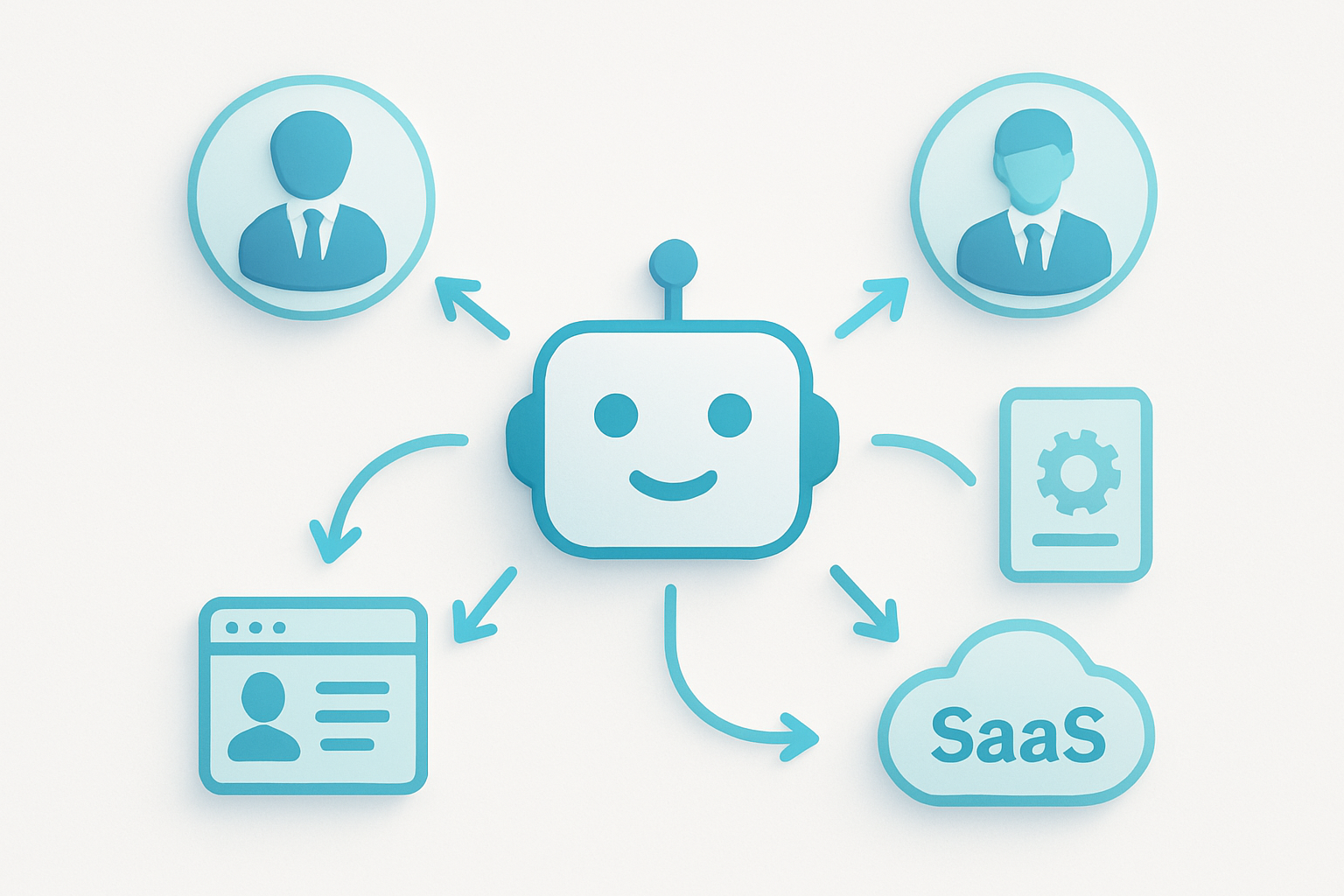
Types of Chatbots for Business
Businesses can choose from several chatbot options, depending on needs and scale:
- Scripted Chatbots: Fast to deploy, low-cost, but limited to simple tasks and require developer updates.
- AI Chatbots: Use NLP and machine learning for complex, personalized conversations. Higher upfront investment but greater long-term ROI.
- Integrated Chatbots: Connect directly with CRM/ERP systems (like Salesforce, HubSpot, SAP), automating lead generation, record updates, and data retrieval.
- Custom Chatbots: Built for unique workflows or multi-channel operations, offering deep customization and scalability.
- Hybrid Chatbots: Combine scripted and AI logic for flexible, multi-channel support.
The right solution depends on your goals, communication volume, tech stack, and budget. For real-world scenarios, see our chatbot development services.
Key Business Benefits of Chatbots in 2026
AI chatbot solutions now automate 60–85% of routine tasks—handling FAQs, processing requests, sending reminders, and qualifying leads. This saves staff hours and reduces costs, all while maintaining or improving service quality.
Modern chatbots are omnichannel, working across Slack, Microsoft Teams, WhatsApp, Facebook Messenger, web, mobile, and voice. Companies using enterprise chatbot development often see conversion rates rise by 10–25% due to instant, personalized responses.
Deep CRM/ERP integration means accurate tracking of conversations, response times, and deal closures. For risk mitigation, review the pitfalls of AI assistant for business integration.
Calculating Chatbot ROI: How to Measure Return on Investment
Understanding ROI is essential for chatbot development decisions. ROI measures profit relative to all chatbot costs—development, deployment, and support. The formula:
- ROI = ((Cost savings + Additional revenue – Total costs) / Total costs) × 100%
Include direct revenue (sales) and indirect benefits (time saved, fewer errors, staff reallocation).
Key Metrics to Track
- Conversion rates (lead to sale)
- Average handling time
- Inquiry volume
- Employee workload
- Percentage of automated processes
Don’t forget hidden costs (revisions, integrations). Benchmark against global use cases for realistic expectations.
ROI Calculation Checklist:
- Identify all revenue sources
- Quantify staff time savings
- Include support and integration costs
- Measure conversion rate changes
- Compare team workload before/after
- Track retention and repeat sales
For a strategic overview, see our AI agent for business.
{{IMAGE_N}}
Chatbot ROI Calculator: Step-by-Step Guide
Before investing in chatbot development, use this framework to project ROI.
Data Needed
- Development and Implementation Costs: One-time and ongoing.
- Support and Maintenance: Monthly/annual.
- Additional Revenue/Savings: Increased sales, reduced workload, fewer errors, lower churn.
- Analysis Period: Typically 12 months.
Calculation Steps
- Gather all cost and revenue data.
- Total Costs = Development Cost + (Support × Periods)
- Additional Revenue = (Monthly Sales Increase × Months) + Labor Savings
- ROI = ((Additional Revenue – Total Costs) / Total Costs) × 100%
- Interpret: ROI > 0% means a positive return.
Example
An online retailer invests $25,000 in chatbot development. Monthly support is $1,200. Over a year, the chatbot adds $60,000 in sales and saves $15,000 in staffing.
- Total Costs: $25,000 + ($1,200 × 12) = $39,400
- Additional Revenue: $60,000 + $15,000 = $75,000
- ROI: ((75,000 – 39,400) / 39,400) × 100% ≈ 90%
This nearly doubles the investment in 12 months. Plug your numbers into this framework to estimate your chatbot ROI.
Real-World ROI Examples: E-commerce, Services, Logistics
Chatbot development delivers measurable value across sectors:
- E-commerce: AI chatbot for customer support/order processing increased sales by 20% in 3 months; order handling time dropped 40%.
- Services: Support chatbot automated 70% of inquiries, cutting support costs by 30%. CRM integration provided seamless customer histories.
- Logistics: Business automation chatbot reduced communication time by 50% and cut operational costs by 15–25% through route optimization and shipment tracking.
| Industry | Key Results | Cost Savings | Revenue/Efficiency Gains |
|---|---|---|---|
| E-commerce | 40% faster order processing | ~10% | +20% online sales |
| Services | 30% lower support expenses | 30% | 70% inquiries automated |
| Logistics | 50% less communication time | 15–25% | Optimized delivery routes |
| B2B SaaS | 25% lower onboarding costs | 20% | Faster client activation |
ROI for enterprise chatbot development is often achieved within 6–12 months when fully customized and integrated.
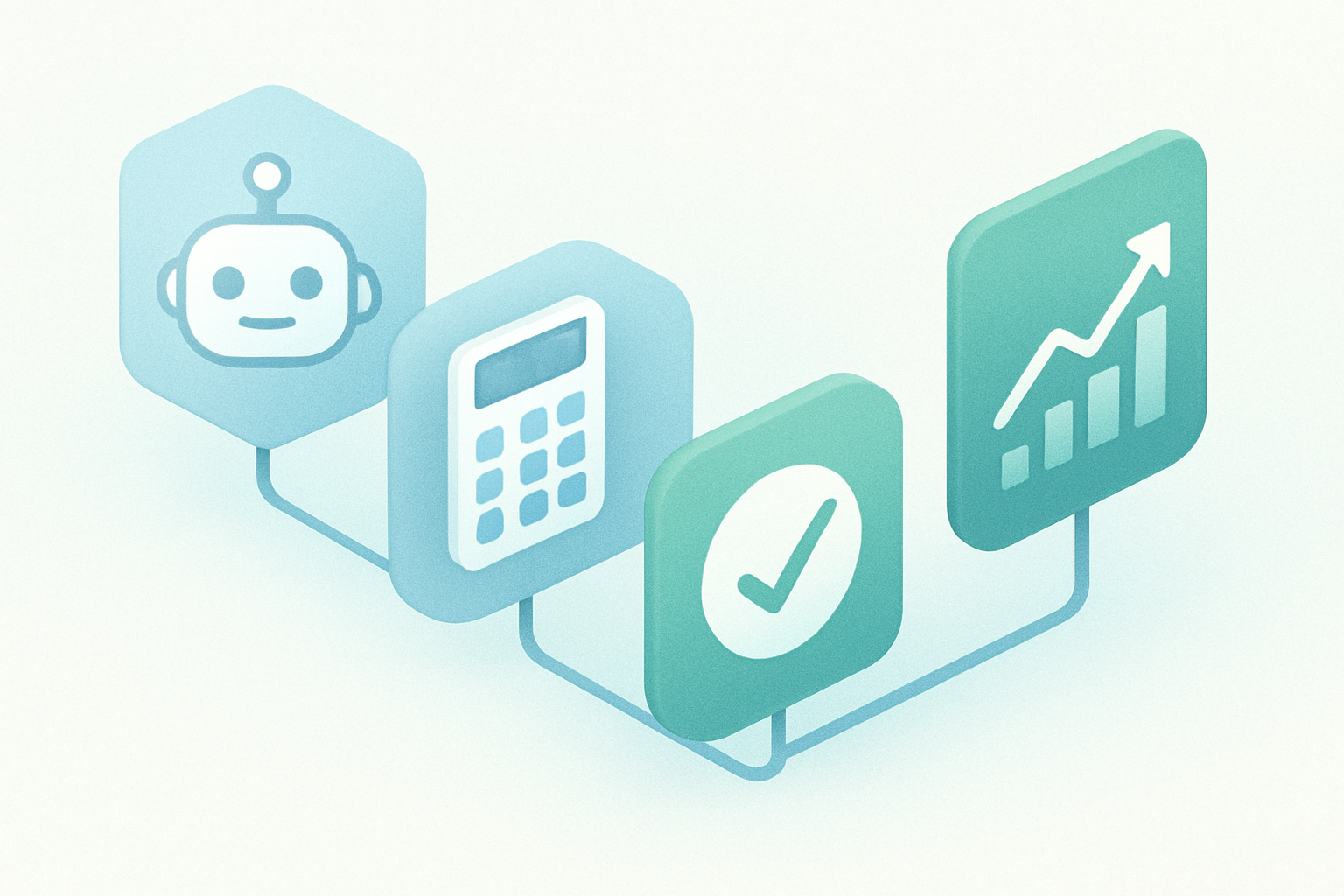
How End-to-End Chatbot Development Works: The Synvolve Solutions Approach
A seamless process is key for effective chatbot development. Here’s how Synvolve Solutions delivers AI chatbot solutions:
Stages of Custom Chatbot Development
- Business Process Audit: Map workflows, identify pain points, define KPIs, and integration needs.
- MVP Development: Build a minimum viable product for core use cases. MVPs are typically ready in 8 weeks for fast feedback.
- Integration and Scaling: Connect with CRM, ERP, analytics, and messaging platforms (Slack, Teams, WhatsApp, etc.)—all with zero downtime.
- Ongoing Support: Continuous monitoring, updates, and scaling as your business grows.
Custom chatbot services adapt to your unique needs, supporting over 50 successful deployments across industries. With Synvolve Solutions, you get a scalable, resilient platform that grows with your business.
Why Custom Chatbot Development Outperforms Templates
Custom chatbot services let you embed AI-powered chatbots into your unique workflows, unlike generic templates. This ensures tailored automation, easy scaling to new channels (Slack, Teams, WhatsApp, email, mobile), and seamless integration with enterprise systems.
A custom solution maintains a single codebase across all channels, simplifying updates and ensuring consistency. Updates can be rolled out without disrupting daily operations.
Security and support are fully customizable, with granular access controls and compliance (GDPR, CCPA, etc.). Enterprises investing in custom AI chatbot solutions consistently achieve higher ROI and more effective automation than with off-the-shelf bots.
Key Takeaways
- Select your chatbot type based on process complexity, automation goals, and budget.
- When calculating chatbot development ROI, include both direct revenue and indirect savings (time, errors, support, integration).
- Track conversion rates, response times, automated workflows, and employee workload.
- Validate ROI assumptions with real-world examples and keep your data up to date.
A well-implemented AI chatbot is an investment that drives efficiency and new revenue. Ready to see what business automation chatbots can do for you? Try our ROI calculator or contact us for a consultation.
Frequently Asked Questions
Can I develop my own chatbot?
Yes. Many no-code and low-code tools let you build simple chatbots, while advanced AI chatbots usually require custom development.
How much does it cost to develop a chatbot?
Costs range from a few hundred dollars for basic bots to tens of thousands for advanced, integrated AI solutions, depending on complexity and support needs.
What are the four types of chatbots?
Scripted (rule-based), AI-powered, hybrid (rules + AI), and voice-enabled chatbots—each suited to different business needs.
Is a chatbot the same as ChatGPT?
No. A chatbot is any conversational automation tool; ChatGPT is a specific AI model by OpenAI used in some advanced chatbots.
What additional business benefits can chatbots bring in 2026?
Chatbots in 2026 offer improved customer experience, 24/7 support, lower costs, personalized interactions, and seamless integration—delivering measurable ROI and competitive advantage.