 Synvolve Solutions
AI agent for business: 5 criteria to choose the best solution
If you’re looking for an AI agent for business, the key is to match the solution to your company’s real needs—not just follow the latest tech trends. An AI agent for business can transform how you handle repetitive tasks, customer queries, and data flows, but only if it aligns with your processes, integrates with your CRM/ERP (like Salesforce or SAP), and meets security and compliance standards (GDPR, CCPA, SOC2). Choosing the right AI agent means considering scalability, ROI, long-term support, and whether a custom or off-the-shelf agent best fits your roadmap. Here are five essential criteria to help you make a confident, future-ready decision.
What Is an AI Agent? Types and Core Functionality
An AI agent for business is software that replicates human-like actions and decision-making using artificial intelligence. These agents automate tasks, streamline workflows, and enable data-driven decisions by autonomously analyzing information, learning from new data, and adapting to changing business conditions.
Types of AI Agents
- Chatbots: Handle customer queries across messaging platforms and CRM systems.
- Virtual Assistants: Manage schedules, send reminders, and coordinate teams.
- Process Automation Agents: Automate document management, financial reconciliation, and other back-office operations.
- Analytical Agents: Aggregate and analyze business data for reporting and decision support.
- Hybrid Agents: Combine multiple functions for complex, multi-channel workflows.
How AI Agents Work
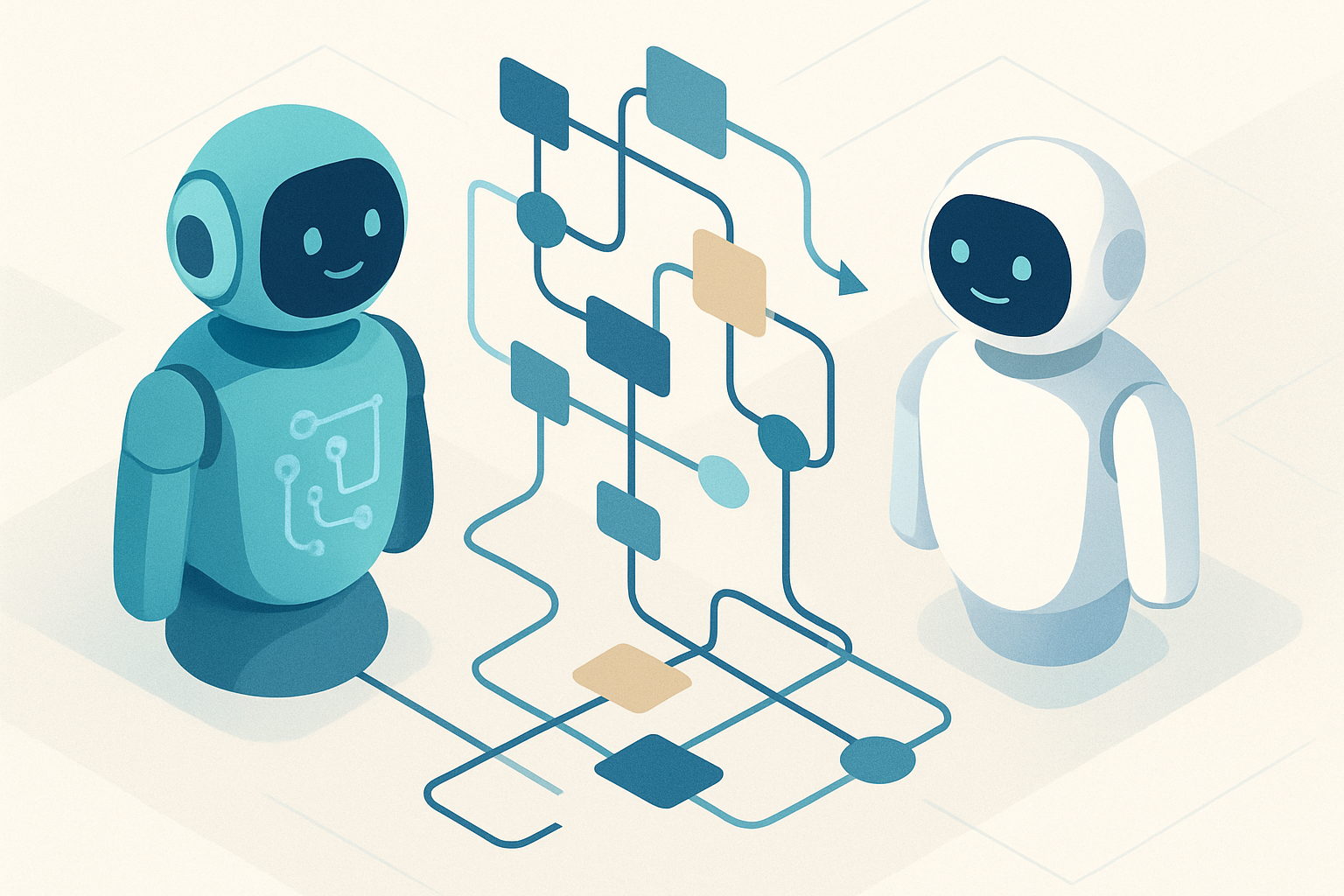
AI agents generally follow this workflow:
- Data Collection: Gather information from sources like CRM (Salesforce, HubSpot), email, APIs, or web forms.
- Analysis: Use machine learning or rules to interpret the data.
- Decision-making: Decide on the next action—responding to a client, generating a report, or triggering an integration.
- Action/Interaction: Execute the action, either through user interaction or software integration.
This cycle can take milliseconds to minutes, depending on process complexity and the AI automation solution. {{IMAGE_N}}
Business Challenges Solved by AI Agents
Integrating an AI agent for business into core processes drives efficiency, reduces manual workload, and boosts productivity. Key use cases include:
- Marketing: Analyze customer behavior, segment audiences, and generate personalized offers, improving conversion rates and reducing ad spend.
- Sales: Automate lead capture, qualification, and nurturing, speeding up response times and improving sales outcomes.
- Customer Support: Provide 24/7 automated support, resolving most routine inquiries without human intervention, cutting support costs.
- Logistics: Optimize delivery routes, enable real-time shipment tracking, and manage inventory to reduce downtime and expenses.
- Finance & HR: Automate reporting, payroll, and candidate screening, reducing errors and accelerating decisions.
AI Agents for Small and Medium Businesses
For SMBs, a custom AI agent enables rapid scaling without expanding the team. Automating repetitive tasks in marketing, sales, and support lets owners focus on innovation and service quality. AI automation solutions can be rolled out in stages and integrate with existing workflows, ensuring minimal disruption.
Custom vs. Off-the-Shelf AI Agents: Which Is Right for You?
When deploying an AI agent for business, you’ll choose between a custom solution tailored to your workflows or an off-the-shelf SaaS agent with standardized features.
- Custom AI Agent: Built around your unique processes, integrating with your CRM/ERP (Salesforce, HubSpot, SAP, Oracle), and meeting industry-specific needs. Offers maximum flexibility and scalability. Development typically takes 6–12 weeks, with costs scaling by complexity.
- Off-the-Shelf AI Agent: Fast to deploy (often within a week), billed monthly, and ideal for common use cases. Limited customization, but perfect for rapid, cost-effective automation.
Choose a custom agent if your processes are complex or require deep integration and compliance. Opt for off-the-shelf if your needs are standard and you want quick deployment.
Comparison Table: Custom vs. Off-the-Shelf AI Agents
| Criteria | Custom AI Agent | Off-the-Shelf AI Agent (SaaS) |
|---|---|---|
| Cost | One-time baseline, scales | Monthly subscription |
| Time to MVP | 6–12 weeks | 1 day – 1 week |
| Customization | Maximum | Limited |
| Integration | Any CRM/ERP/API supported | Only supported platforms |
| Support | Personalized | Standard |
Five Essential Criteria for Choosing an AI Agent for Business
To select the right AI agent for business, evaluate solutions against these five criteria:
Scalability:
- Can the agent handle growth and peak loads?
- Does it support adding features or channels as your needs evolve?
Integration:
- How easily does it connect with your CRM/ERP (Salesforce, HubSpot, SAP, Oracle) and APIs?
- Does it support your required data formats and workflows?
Data Security & Compliance:
- What encryption and security standards are used?
- Is it compliant with GDPR, CCPA, SOC2, ISO 27001?
- Can you configure access controls for different roles?
Adaptability:
- Can the agent adjust to process changes or new features?
- What’s the SLA for updates and changes?
Support & Service:
- What support channels and response times are offered?
- Is onboarding and post-launch support included?
Quick Checklist:
- Check scalability for your growth plans.
- Confirm integration with your core systems.
- Review security and compliance.
- See how the platform adapts to changes.
- Demand a clear SLA and 24/7 support.
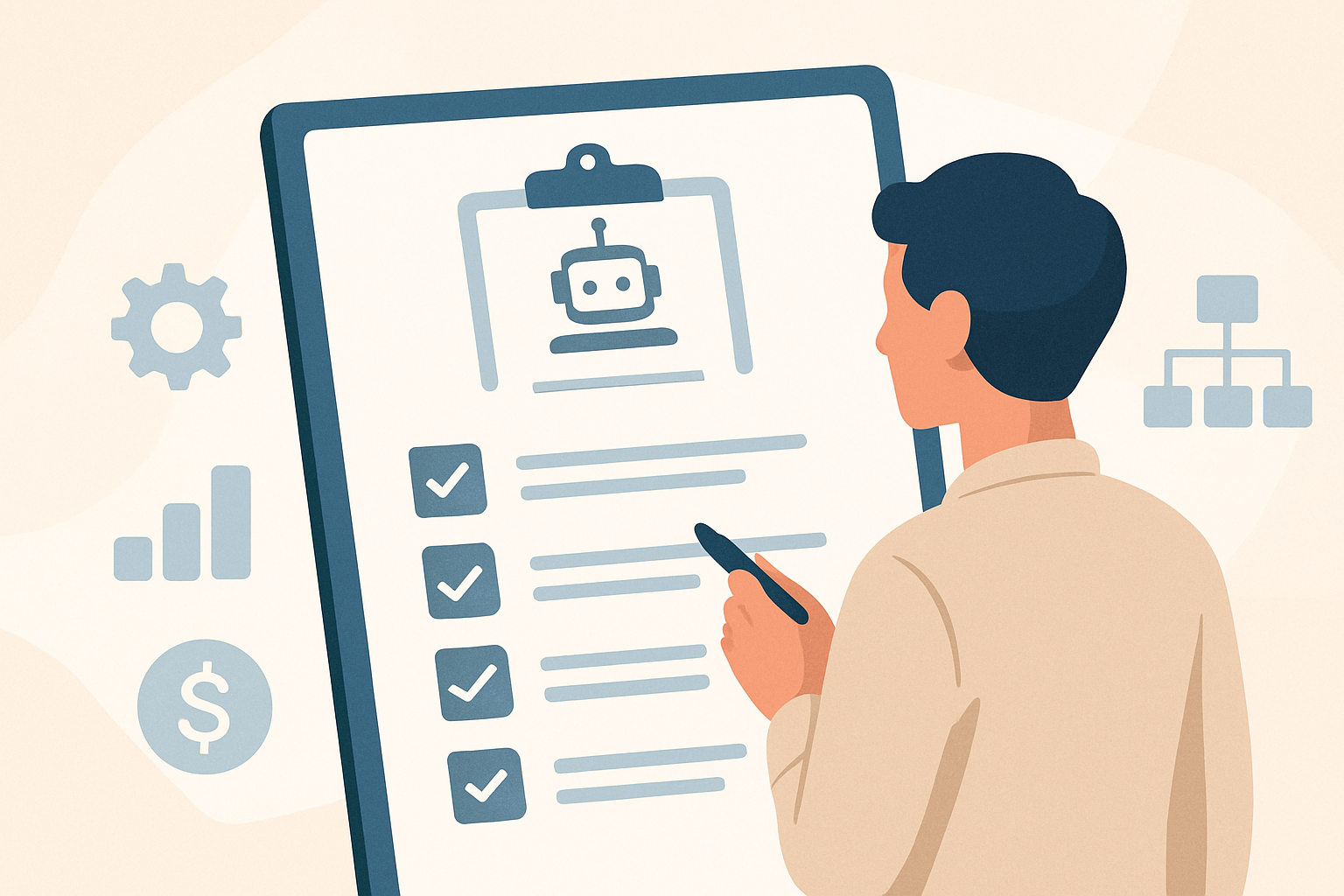
Checklist for Evaluating an AI Agent
Use this checklist to assess if an AI agent for business fits your needs:
- Define tasks to automate or enhance (e.g., customer inquiries, accounting, CRM integration).
- Check integrations: Does the agent support your CRM/ERP (Salesforce, SAP, Oracle, Microsoft Dynamics), email, or accounting software?
- Evaluate customization: Can workflows and permissions be tailored to your processes?
- Clarify SLA and support: What are implementation timelines and support commitments?
- Assess scalability: Can it handle more data and users as you grow?
- Estimate ROI: How many hours or costs will it realistically save?
- Validate vendor expertise: Ask for case studies and references in your sector.
Work through these with your team to minimize risks and ensure you select an AI agent that delivers measurable value.
Real-World Implementation: Global Success Stories
Small and Medium Business Success
Businesses worldwide use custom AI agents to streamline operations and accelerate growth. For example, an electronics retailer cut order handling time from 15 to 4 minutes and reduced documentation errors by 70% after launching a custom AI agent. In logistics, a transport provider used an AI agent to optimize delivery routes, boosting efficiency by 35% and saving 200+ hours monthly. Financial services firms use AI agents to verify transactions and speed up onboarding.
Custom AI automation solutions—like those from Synvolve Solutions—integrate smoothly into complex workflows, often delivering ROI in 3–6 months and boosting process efficiency by 30% or more.
Common Pitfalls When Selecting and Implementing AI Agents
Adopting an AI agent for business can go wrong if you:
- Underestimate integration complexity with platforms like Salesforce, SAP, or Oracle.
- Choose a generic off-the-shelf agent that doesn’t fit your unique workflows or compliance needs.
- Overlook security and compliance, risking data breaches or regulatory penalties.
- Skip structured rollout and change management, leading to disruptions and user frustration.
To avoid these pitfalls:
- Assess integration with your current systems.
- Prioritize scalable, adaptable solutions.
- Demand a security audit and compliance documentation.
- Plan for robust post-launch support and clear SLAs.
- Choose partners with proven expertise in your industry.
The Importance of Expertise and Ongoing Support
Your AI agent developer’s expertise directly impacts project success. A skilled provider ensures your AI automation solution fits your workflows and integrates with your CRM/ERP (Salesforce, HubSpot, SAP, Oracle) without disrupting operations.
Ongoing support is critical. As your business evolves, you need a partner who can provide updates, troubleshoot issues, and scale your solution. When evaluating vendors, review their portfolio, integration experience, and SLAs. Reliable support is essential for scalable, future-ready automation.
{{IMAGE_N}}
Key Takeaways
- Assess scalability: your AI agent for business should handle growth and new channels.
- Evaluate integration with your CRM/ERP (Salesforce, HubSpot, SAP, Oracle) and third-party services.
- Prioritize security and compliance: require encryption and regulatory adherence.
- Choose between custom and off-the-shelf agents based on process complexity, growth, and budget.
Selecting the right AI automation solution is a strategic move toward intelligent process automation and operational excellence. Use these criteria to find the best-fit AI-powered business agent to drive efficiency and scale with confidence. For tailored guidance, consult specialists in AI workflow automation and business process automation with AI.
Frequently Asked Questions
What can an AI agent do for my business?
An AI agent can automate repetitive tasks, analyze data, and support decision-making, increasing efficiency and reducing costs. It can also improve customer service, streamline workflows, and help your business scale.
Which AI agent is best for business?
The best AI agent depends on your needs and industry. Custom agents offer tailored solutions; off-the-shelf options provide fast deployment and standard features. Evaluate scalability, integration, and support before choosing.
How do I make an AI agent for my business?
Define your process requirements, choose between custom or off-the-shelf solutions, and partner with experienced AI developers. Ensure the solution integrates with your systems and aligns with your goals.
What are the 7 types of AI agents?
The 7 types usually include simple reflex agents, model-based reflex agents, goal-based agents, utility-based agents, learning agents, collaborative agents, and mobile agents. Each serves different business needs.
Is ChatGPT a type of AI agent?
Yes, ChatGPT is a conversational AI agent designed to understand and generate human-like text. It can be used in business for customer support, information retrieval, and automating communication tasks.