
Chatbot: 5 Key Trends in Viber, Telegram, WhatsApp for Business

Over the past few years, the chatbot has shifted from a digital novelty to a core business tool for automation, customer support, and sales on platforms like WhatsApp, Telegram, and Messenger. A chatbot is a software application that simulates human conversation—handling inquiries, processing orders, and guiding product choices—all within familiar messaging apps. Today’s chatbots are more than scripted responders: they are AI-driven agents that integrate with CRM, ERP, and payment systems. This article highlights the key trends shaping chatbot use in business for 2024, with practical advice for companies in the US, Europe, and beyond.

What is a Chatbot: Definition, Types, and Evolution

A chatbot is a software agent that automates communication with users via text or voice in messengers, websites, or apps. It acts as a conversational interface, letting businesses process requests, deliver information, handle sales, or provide support—often without human involvement. Early chatbots like ELIZA appeared in the 1960s, but widespread use began with the rise of messaging platforms and mobile devices.

Types of Chatbots

  • Rule-based chatbots: Operate on fixed scripts, responding to keywords or commands. Best for simple, predictable conversations.
  • AI-powered chatbots: Use machine learning and natural language processing (NLP) to understand intent, learn from interactions, and provide flexible responses.
  • Hybrid chatbots: Blend rule-based flows with AI, supporting both guided and open-ended conversations.

Chatbot Evolution

Chatbots have developed through:

  1. Scripted bots: Basic, template-driven replies.
  2. NLP and machine learning: More natural, context-aware interaction.
  3. Omnichannel AI agents: Deep integration with CRM, ERP, and SaaS tools.

Today, chatbots automate repetitive tasks, support lead generation, gather data, deliver personalized marketing, and provide scalable support across channels like WhatsApp, Telegram, and Messenger. This enables organizations to scale service and reduce workload while maintaining customer experience. {{IMAGE_N}}

Platform Overview: Chatbot Capabilities in WhatsApp, Telegram, and Messenger

Selecting a messaging platform is crucial for chatbot deployment. Each messenger—WhatsApp, Telegram, and Messenger—offers unique integration options and audience reach.

WhatsApp WhatsApp leads globally, with 2+ billion users. The WhatsApp Business API enables automation for support, notifications, and transactions, but has restrictions:

  • Access only via the official API
  • Limited customization
  • Broadcasts are regulated and may incur costs
  • Compliance with privacy laws like GDPR is mandatory

WhatsApp’s trust and ubiquity make it ideal for transactional support, order confirmations, and secure notifications.

Telegram Telegram offers an open API, flexibility, and fast integration. It supports advanced dialog flows, inline bots, custom keyboards, file handling, and integration with CRM, ERP, or SaaS tools. Telegram is popular with tech-savvy audiences and sectors like IT, fintech, and e-commerce. Key strengths:

  • Deep automation and dynamic workflows
  • Multi-step authentication
  • Integration via webhooks
  • No strict controls on bot creation or broadcasts

Telegram suits complex automation, personalized recommendations, onboarding, and omnichannel engagement.

Messenger Messenger remains strong in North America and Europe, with robust business features:

  • Integration with Facebook business pages
  • Rich media (images, videos, carousels)
  • Automated responses, lead generation, surveys
  • Compatibility with HubSpot, Salesforce, Shopify

Messenger is well-suited for support, marketing automation, and conversational commerce.

Viber Viber has a loyal base in select markets, but is less relevant in English-speaking countries. It supports basic broadcasts, surveys, and simple integrations, but advanced automation is limited.

Choose your platform based on audience, integration needs, and compliance. For mass marketing—Messenger or Telegram; for secure transactions—WhatsApp; for advanced automation—Telegram.

Feature Comparison Table

Platform Core Features API/Integration Level Global Audience Size Key Limitations
WhatsApp Notifications, order confirmations, support Official Business API 2+ billion API-only access, paid broadcasts
Telegram Advanced automation, inline bots, custom UI Open API, Webhooks 700+ million No official business support lines
Messenger Rich media, lead gen, e-commerce Extensive integrations 1+ billion Requires Facebook ecosystem
Viber Broadcasts, surveys, basic automation Limited API Market-dependent Restricted outside core regions

{{IMAGE_N}}

Once you choose a platform, it’s vital to follow chatbot technology trends. Over 60% of businesses now integrate chatbots with CRM systems, cutting response times to 2–3 minutes. Modern chatbots go beyond FAQs—they engage users, segment audiences, and trigger complex workflows.

Deep integration with CRM, ERP, and other core tools is now standard for managing the customer journey and automating sales. In e-commerce, logistics, and finance, chatbots generate leads, process transactions, and send reminders automatically.

AI-driven chatbots now deliver personalized recommendations and dynamic workflows. By analyzing purchase history and behavior, they can boost repeat sales and increase conversion rates by 12–25%.

Omnichannel presence is another trend: businesses deploy chatbots across WhatsApp, Telegram, Messenger, and web, managed through a unified backend. This prevents lead loss and ensures a seamless customer experience.

Custom workflows and integrations are replacing generic bots. Companies invest in tailored solutions that scale with their business.

Real-World Deployments

  • Automated Requests: A tech company integrated a chatbot with HubSpot CRM, reducing response time from 20 to 3 minutes.
  • Personalized Offers: A retailer saw an 18% revenue boost using an AI chatbot for product recommendations.
  • Omnichannel Support: A delivery service launched a chatbot across Telegram, WhatsApp, and Messenger, managed centrally.
  • Dynamic Sales: A financial firm automated onboarding and document collection with a chatbot.
  • ERP Integration: A manufacturer syncs chatbot orders with ERP, cutting order errors by 30%.
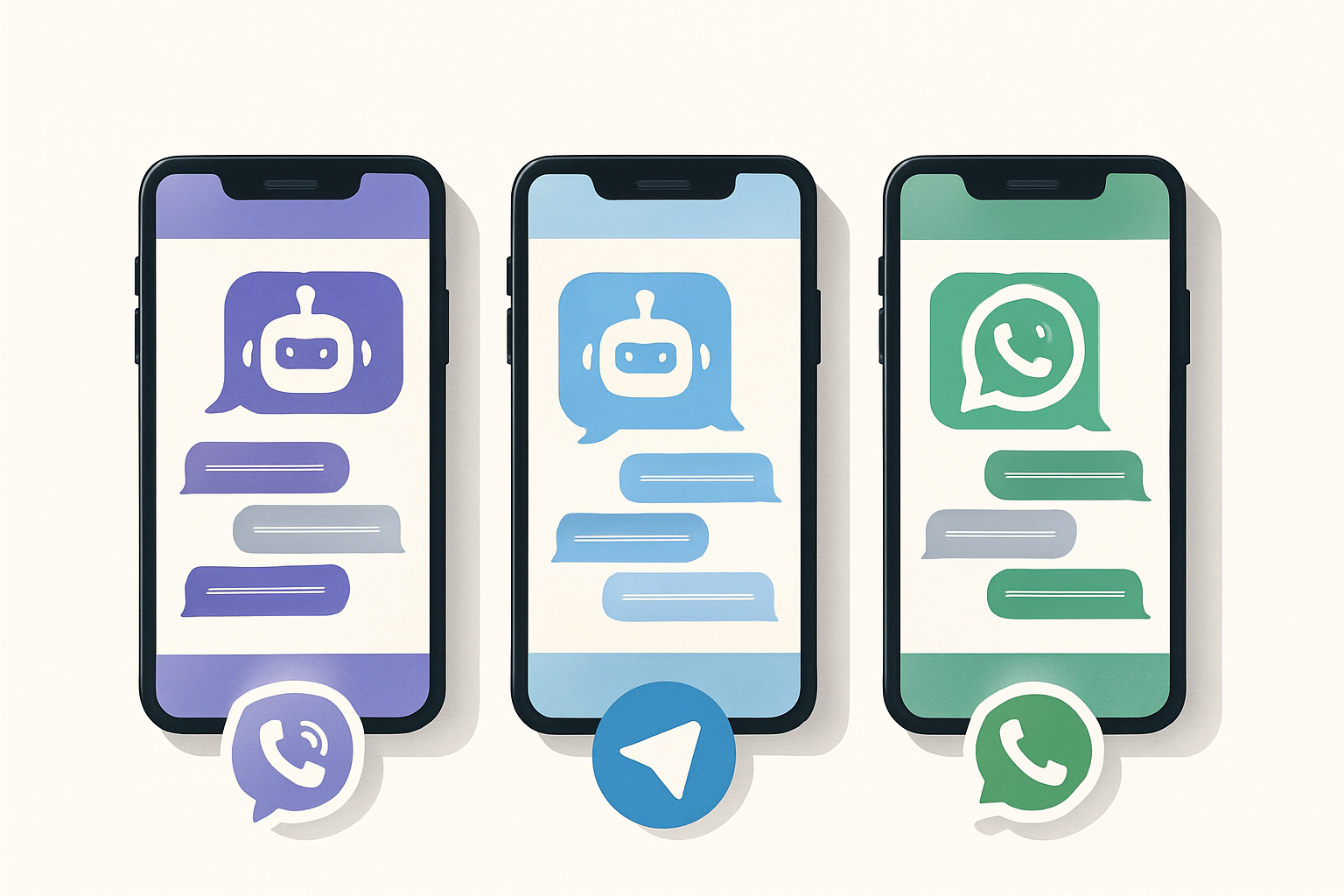
Smartphones displaying chatbot interfaces for Viber, Telegram, WhatsApp on white background
Interface comparison of chatbots in Viber, Telegram, and WhatsApp.

Chatbot Use Cases in Retail, Energy, and Banking

Let’s see how chatbots transform operations in key industries, focusing on Telegram, WhatsApp, and Messenger, plus integration with CRM and ERP systems.

Retail: Engagement and Automation

Retailers use chatbots on WhatsApp and Telegram for:

  • Broadcast Messaging: Sending promotions, coupons, and exclusive deals.
  • Personalized Recommendations: CRM-driven segmentation and targeted offers.
  • Feedback and Surveys: Automating post-purchase surveys and feedback.
  • Inventory Requests: Connecting to ERP for real-time stock updates.
  • Gamification and Loyalty: Telegram chatbots power gamified loyalty programs.

Energy: Self-Service and Alerts

Energy providers leverage chatbots for:

  • Meter Readings: Automating data submission via photo or text.
  • Service Notifications: Sending outage alerts and maintenance updates.
  • Billing and Support: Integrating with ERP for invoices and 24/7 support.
  • Feedback: Quick surveys on service quality.

Banking: Secure Support and Transactions

Banks deploy chatbots for:

  • Authentication and Account Management: Secure identity checks, statements, payments, and account tasks.
  • Transaction Verification: Automating alerts and confirmations, especially on WhatsApp.
  • Customer Support: Instant answers to common questions, card blocking, escalation to agents.
  • Push Notifications: Timely updates on tariffs, activity, and promotions, with GDPR compliance.

These examples show how an AI chatbot can drive automation and seamless experiences across industries and platforms. {{IMAGE_N}}

The Role of AI in Modern Chatbots

AI has transformed chatbot capabilities. Unlike rule-based bots, AI-powered chatbots use machine learning and NLP to understand intent and generate real-time, personalized responses. They can identify customer needs, adapt workflows, recommend products, and resolve requests automatically.

For complex businesses—finance, logistics, e-commerce—AI chatbots integrate with CRM and ERP for end-to-end automation: from capturing inquiries to updating records and triggering payments.

The effectiveness of an AI chatbot depends on:

  • The quality of its training data
  • The robustness of business system integrations

Limitations include:

  • Struggles with ambiguous queries
  • Challenges with industry jargon or multilingual settings
  • Potential compliance risks in regulated sectors

To maximize value:

  • Test with real user scenarios
  • Restrict bot access to sensitive functions
  • Regularly audit conversations for accuracy and compliance

With proper setup and support, AI chatbots can scale automation, but require ongoing management for reliability. {{IMAGE_N}}

How to Choose and Integrate a Chatbot

After exploring AI’s potential, select the right platform and integrate your chatbot into business processes. The choice depends on your goals, audience, and required features. For customer support in the US or Europe, WhatsApp and Telegram are top choices, while Messenger remains important for B2C brands. For full omnichannel engagement, custom development with CRM and ERP integration delivers the most value.

Checklist for Choosing a Chatbot Platform

  • Define business processes for automation
  • Analyze which messengers your customers use
  • Choose a platform supporting needed integrations (CRM, ERP, payments)
  • Ensure robust APIs and SDKs
  • Check security and regulatory compliance
  • Align budget for development and support
  • Pilot with a small user group for feedback

Roll out your chatbot incrementally: start with one channel, connect to CRM, gather feedback, and scale once core use cases are validated. This reduces risk and keeps you in control.
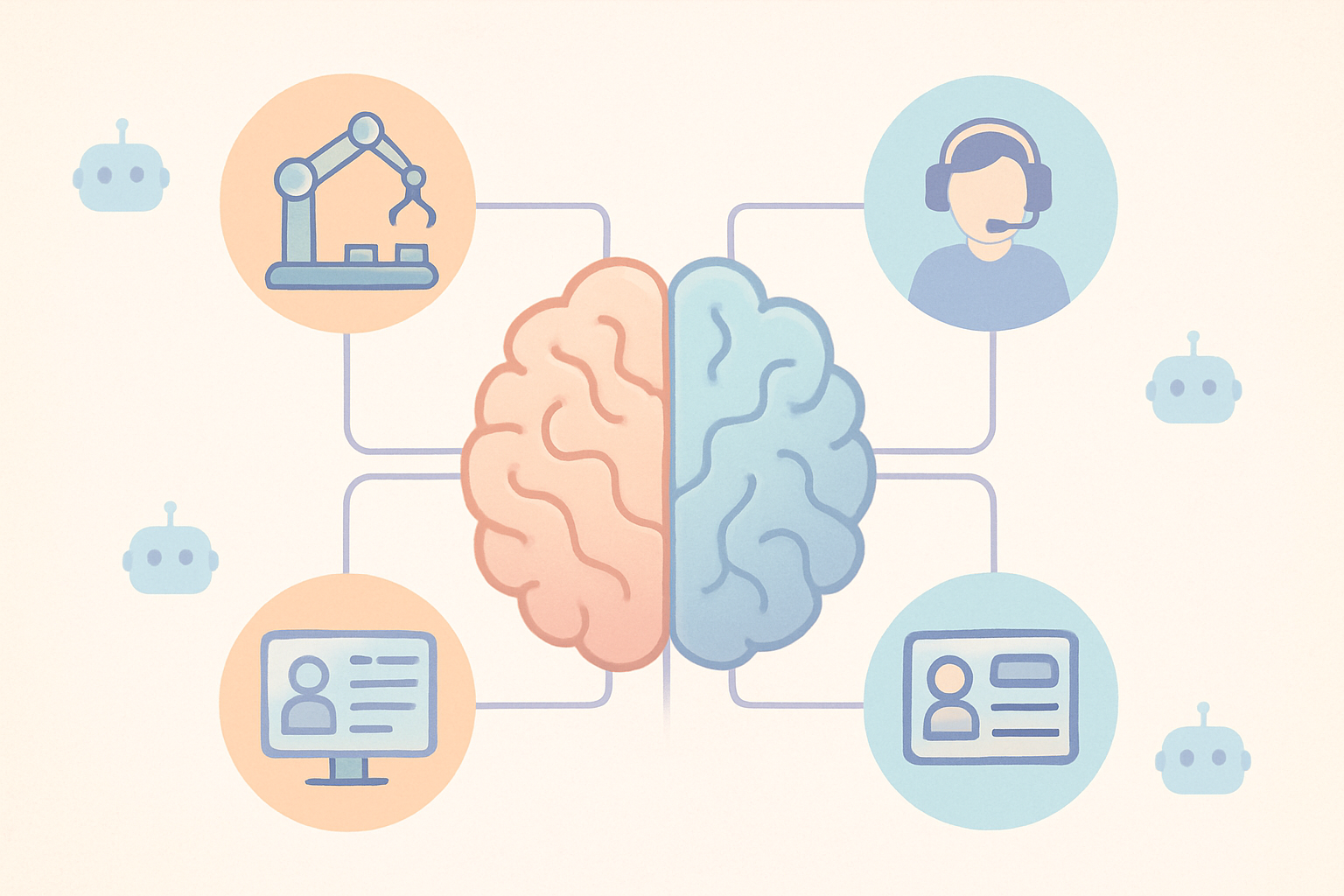
Artificial intelligence and business automation via chatbots in messengers
AI chatbots streamline business operations and customer support.

Business Benefits of Chatbots

Deploying a chatbot can reduce routine workload by two to five times, depending on your industry and workflow complexity. Automation frees your team from repetitive tasks: FAQs, returns, bookings, and order tracking are handled automatically. Integrating your chatbot with CRM and ERP ensures customers get timely, accurate information.

Chatbot-powered support delivers 24/7 availability, faster responses, and higher loyalty. In e-commerce, automated notifications can cut repeat support tickets by 20–35%. Your support team can then focus on complex issues.

For sales and marketing, chatbots drive results: campaign broadcasts on WhatsApp, Telegram, or Messenger can reach up to 15% conversion rates, with open rates often above 70%. For small and mid-sized businesses, this means more qualified leads—without extra staff.

Smartphones displaying chatbot interfaces for Viber, Telegram, WhatsApp on white background
Interface comparison of chatbots in Viber, Telegram, and WhatsApp.

Key Takeaways

  • Choose the Right Chatbot Platform: Pick your primary messenger based on business goals. For mass messaging, WhatsApp and Messenger offer reach and APIs; Telegram excels at automation; WhatsApp is best for secure, real-time support.
  • CRM/ERP Integration Is Essential: Connect your chatbot to CRM or ERP to automate lead capture, order processing, and follow-ups—reducing errors and accelerating sales.
  • Personalization & Omnichannel Matter: Personalized workflows and omnichannel presence (WhatsApp, Telegram, Messenger, web) boost engagement and loyalty.
  • Custom Solutions Scale With You: Tailored AI chatbots adapt to your processes and support future growth—something generic bots can’t match.

Implementing a chatbot isn’t just about saving time—it’s a strategic upgrade for customer experience. Assess your needs, choose the right platform, and define use cases to unlock automation’s full potential.

Frequently Asked Questions

Is chatbot the same as ChatGPT?

No, a chatbot is any software that automates conversations. ChatGPT is a specific AI-powered chatbot by OpenAI, using advanced language models. Not all chatbots are as sophisticated or AI-based.

Is there a free chatbot?

Yes, free chatbot solutions exist. Telegram and Messenger offer basic chatbot creation tools at no cost, and some third-party services have free plans for small-scale use.

Is Alexa a chatbot?

Alexa is a voice-activated virtual assistant by Amazon. While it uses conversational AI like chatbots, Alexa is designed for smart home integration and voice commands.

What are the four types of chatbots?

The main types are: rule-based bots, AI-powered bots, hybrid bots (rules + AI), and voice-enabled bots. Each serves different business needs.

What are the 3 best AI chatbots?

The top three are ChatGPT by OpenAI, Google’s Bard, and Microsoft’s Bing Chat. These offer advanced conversational abilities for business and personal use.
Chatbot Development Services: 7 Solutions for Business Success

If you’re considering chatbot development services for your business, you’re in the right place. Modern chatbots drive efficiency, boost ROI, and can be tailored for secure, compliant use across platforms like WhatsApp, Facebook Messenger, Slack, and Microsoft Teams. Today’s AI-powered bots do more than automate routine tasks—they qualify leads, personalize customer journeys, and integrate with your CRM or ERP, all while meeting regulations such as GDPR and CCPA. This article explores seven proven chatbot solutions that deliver measurable results, showing how both custom and SaaS-based bots save resources, streamline operations, and fit seamlessly into omnichannel strategies.

Key Use Cases Fueling Chatbot Adoption

In the US, UK, and EU, chatbot development services are rapidly gaining traction as businesses automate processes and offer 24/7 engagement. Companies of all sizes are adopting AI chatbot solutions to improve efficiency and customer service across channels—WhatsApp, Messenger, Slack, Microsoft Teams, and web chat. Typical applications include:

  • Retail: Automating sales, sending personalized offers, and handling customer queries.
  • Finance: Providing instant account info, payment reminders, and secure transaction support.
  • Logistics: Real-time shipment tracking and automated support.
  • Professional Services: Appointment scheduling, lead qualification, and SaaS integration.

Why AI-Powered Chatbots Matter

AI chatbots are now essential for companies aiming to reduce response times and deliver seamless experiences at scale. With robust enterprise chatbot integration, these bots go far beyond FAQs:

  • Generate and qualify leads, updating sales pipelines automatically.
  • Automate document approvals and workflows.
  • Deliver personalized recommendations, adapting in real time.

Custom chatbot development is growing fast as businesses demand solutions that fit their unique needs. Key trends include:

  • Omnichannel logic: One AI engine for chat, voice, and social platforms.
  • Deep personalization: Using data securely for tailored experiences.
  • Fast deployment, high flexibility: Expanding features without sacrificing compliance.
  • Enterprise integrations: Connecting to business systems while protecting data privacy.

For organizations seeking maximum ROI, bespoke AI chatbot solutions are quickly becoming the standard for digital transformation.

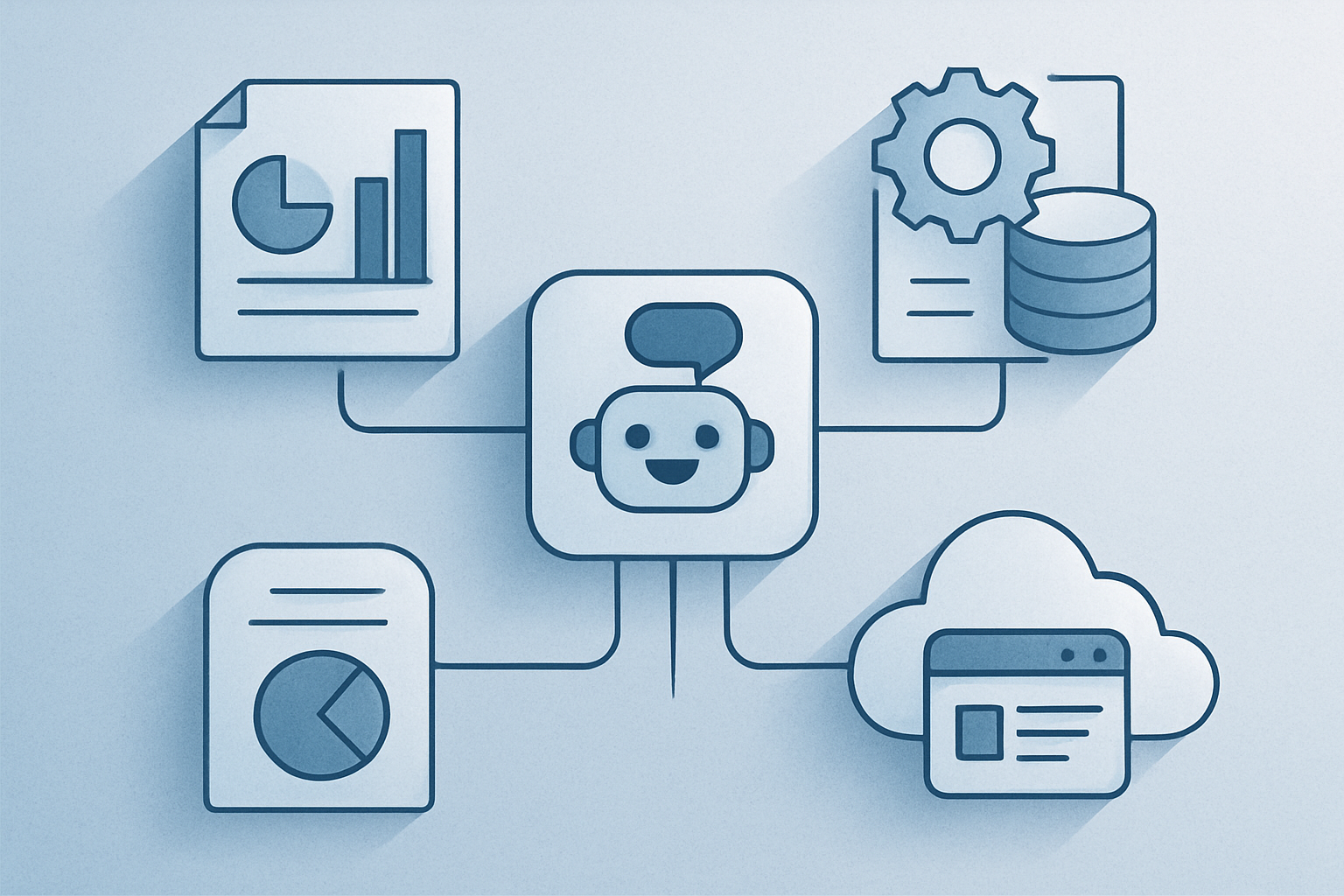
Diagram of business process automation with chatbot integration
Diagram showing chatbot integration with business services.

7 Chatbot Success Stories: Business Impact Worldwide

Here’s how chatbot development services are transforming businesses globally, from telecom and retail to healthcare and energy:

  • A telecom operator launched a chatbot on WhatsApp and Messenger, reducing call center volume by 40%. The bot handles requests, diagnostics, and outage updates—delivering 24/7 support.
  • A government health chatbot processed over 2 million COVID certificate requests, cutting turnaround from three days to 15 minutes, fully compliant with GDPR and CCPA.
  • A retail chain integrated an AI chatbot with CRM and loyalty programs. Customers reserve products and get support via Messenger or webchat, with all inquiries syncing to HubSpot. Repeat purchases rose 22%.
  • In healthcare, an appointment scheduling chatbot increased booking conversions by 18%, letting patients self-schedule and reducing errors.
  • A bank launched an enterprise chatbot for account management. Clients request statements, block cards, and flag accounts—70% of requests are handled automatically.
  • A public safety chatbot collects anonymous tips, instantly routing reports into internal systems for faster response and data privacy.
  • An energy provider’s notification chatbot, integrated with utility APIs, delivers real-time outage alerts to over 900,000 subscribers, maintaining 99% uptime.

These deployments required deep integration with business processes, from CRM/ERP syncing to automated updates. Leading cases have delivered ROI of 250–400% by reducing manual workload and improving customer experience.

Table: 7 Industry Chatbot Examples

Chatbot Industry Goals Impact / ROI
Telecom Support Bot Telecom Automate support, reduce calls -40% call volume, 24/7 service
Health Authority Bot GovTech High-volume processing 2M+ requests, 15x faster turnaround
Retail CRM Bot Retail CRM sync, reservations +22% repeat sales
Medical Booking Bot Healthcare Automate scheduling +18% conversions, fewer errors
Banking Self-Service Finance Account management 70% of queries resolved by bot
Public Safety Bot Security Anonymous reporting Faster response, full automation
Energy Alerts Bot Energy Mass notifications 900K+ subscribers, 99% uptime

{{IMAGE_N}}

AI Chatbots: Business Impact and Key Applications

AI chatbots are more than scripted responders—they understand user intent, analyze conversation history, and learn from every interaction. Unlike traditional bots, AI chatbots handle unstructured queries and adapt to each customer’s style. Top areas for AI chatbot solutions include:

  • 24/7 customer support on WhatsApp, Messenger, or webchat
  • Automated order intake and scheduling
  • Lead qualification and nurturing
  • Interactive FAQ and self-service
  • Personalized communications via CRM/ERP integration

For example:

  • E-commerce: Automate up to 60% of inquiries, freeing agents for complex cases.
  • Insurance: Automate claims intake.
  • Logistics: Real-time order tracking and notifications.
  • Finance: Streamline onboarding and support from application to deal closure.

With enterprise chatbot integration, organizations can track interactions and segment audiences in real time. The ROI of implementing a custom chatbot for business is typically realized within 4–9 months, depending on automation scale and integration depth.

Diagram of business process automation with chatbot integration
Diagram showing chatbot integration with business services.

Custom vs. Template Chatbots: What’s Right for Your Business?

When evaluating chatbot development services, it’s important to distinguish between custom AI chatbot solutions and template-based SaaS platforms.

Custom chatbot development is tailored to your business logic, workflows, and integration needs—ideal for complex operations, omnichannel communication, or unique automation. If you need advanced CRM/ERP integration or AI-powered recommendations, a template chatbot won’t suffice.

Template SaaS chatbots (e.g., ManyChat, Intercom, Drift, Zendesk, HubSpot) are great for rapid deployment of basic scenarios: FAQs, lead capture, or scheduling. These can launch in 1–5 days, with pricing from $20 to $150/month. However, customization and enterprise chatbot integration are limited.

For advanced automation, personalized journeys, or unique integrations, a custom chatbot is the best investment. Custom development typically takes 6–12 weeks, with budgets from $3,000 to $25,000+.

Use cases:

  • Template chatbots: FAQ automation, bookings, surveys
  • Custom chatbots: AI agents, analytics, ERP integration, smart campaigns
Diagram of business process automation with chatbot integration
Diagram showing chatbot integration with business services.

Comparison Table: Custom vs. Template Chatbots

Criteria Template Chatbot Custom Development SaaS with Extensions
Deployment Time 1–5 days 6–12 weeks 1–7 days
Cost $20–$150/month $3,000–$25,000+ $40–$200/month
Flexibility Limited Unlimited Moderate (platform-dependent)
Integrations Basic (CRM, email, etc.) Any (API, CRM, ERP) Expandable via marketplace/apps
Scalability Challenging Unlimited May depend on subscription tier

Choose your approach based on business goals, technical needs, and ROI. Always consider compliance requirements like GDPR or CCPA.

Automating Business Processes: Top Use Cases

After selecting chatbot development services, identify which processes to automate. AI chatbots can cut response times by up to 80% and reduce support costs by 30–50%. Modern bots integrate with CRM, ERP, and other systems to synchronize data, accelerate workflows, and provide 24/7 support across channels.

Top 5 Processes to Automate with Chatbots

  • Customer Support: Answer FAQs, log requests to CRM, provide real-time updates—freeing up to 60% of support time.
  • Sales: Capture and qualify leads, process orders, and sync data—shortening sales cycles by 30–40%.
  • HR & Recruitment: Collect resumes, pre-screen candidates, and schedule interviews—saving HR teams up to 20 hours per month.
  • Logistics & Delivery: Track shipments, update addresses, and send notifications—reducing support calls by 3–4 times.
  • Surveys & Document Workflows: Automate feedback, onboarding, and document submissions—no manual intervention needed.

Custom chatbots enable deeper automation via tailored integrations, maintaining unified data and supporting compliance with GDPR and CCPA.

Diagram of business process automation with chatbot integration
Diagram showing chatbot integration with business services.

Stages of Custom Chatbot Development

A structured approach ensures chatbot development services deliver real business value. Here’s how a typical project unfolds:

5 Steps to Launching Your Chatbot MVP

  1. Business Process Analysis

Define objectives, required integrations (CRM/ERP/SaaS), and user journeys. Involve key stakeholders. (3–5 days)

  1. Architecture Design

Define modules, APIs, and channels (WhatsApp, Messenger, Slack, Teams, webchat). Assess integration, security, and compliance. (2–4 days)

  1. MVP Development

Build core features for primary workflows. Custom MVPs typically take 4–8 weeks.

  1. Integration Testing & Pilot

Test integrations with existing systems and launch a controlled pilot. (5–10 days)

  1. Scaling & Optimization

Expand features, add channels, analytics, and advanced AI. MVP costs start around $4,000 and rise with integrations.

Workspace with laptop and AI chatbot for business automation
Business desk with laptop and chatbot for task automation.

Choosing a Chatbot Development Partner: Checklist

Selecting the right partner for chatbot development services is crucial. Focus on providers with proven expertise, a strong portfolio, and reliable post-launch support. Ask about CRM/ERP integration, real-world automation projects, support SLAs, pricing, and MVP timelines. Ensure they can work with SaaS platforms, build custom modules, and scale as your needs grow.

Checklist:

  • Review a portfolio of custom chatbots for business processes
  • Ask about integration with your systems (e.g., HubSpot, Zendesk, Salesforce)
  • Clarify SLAs and support terms
  • Request a transparent cost breakdown and development milestones
  • Evaluate scalability, uptime, and business continuity
  • Assess flexibility for changing requirements
  • Interview the actual development team

Choose wisely to ensure secure, scalable, and compliant AI chatbot solutions—especially in regulated markets like the US, UK, and EU. {{IMAGE_N}}

Key Takeaways

  • Use chatbots to automate essential processes—reducing workload, speeding up responses, and improving customer experience.
  • Choose template SaaS chatbots for standard workflows; opt for custom chatbot development with CRM/ERP integration for advanced needs.
  • Deploy AI-powered chatbots for personalized, 24/7 support and agile responses—boosting conversions and loyalty.
  • Top chatbot development services deliver ROI of 250–400% through time savings and automation.

Chatbots are proven drivers of business growth and efficiency. For a tailored AI chatbot solution, consult industry experts to select the best approach for your business.

Frequently Asked Questions

How much does it cost to develop a chatbot?

Development costs range from $5,000 to over $100,000, depending on complexity, features, and customization. Integration and AI capabilities also affect pricing.

What are the top chatbot development companies in the USA?

Leading companies include Botpress, Tidio, Meya.ai, and Pandorabots, all known for custom chatbot solutions and scalable automation.

How do I develop my own chatbot?

Define your goals, choose a platform or framework, design conversation flows, and integrate AI as needed. Tools like Dialogflow and Microsoft Bot Framework can help, or you can hire chatbot development services for custom solutions.

Where can I find chatbot app development services?

Look for services via online directories, tech marketplaces, or agency websites such as Clutch.co, Upwork, and specialized chatbot firms. Always review portfolios and testimonials.

Can I make money with a chatbot?

Yes—by automating sales, generating leads, offering paid support, or subscription services. Chatbots can improve conversions and reduce costs, boosting profitability.