 Synvolve Solutions
If you’re wondering how business process automation with AI is transforming today’s competitive landscape, the answer is clear: AI-powered automation is now central to boosting ROI, productivity, and efficiency across industries. Leading companies are leveraging business process automation with AI to streamline customer support, sales workflows, onboarding, financial reporting, and supply chain management. Tools like Salesforce, HubSpot, and Microsoft Dynamics make it easier for organizations of all sizes to automate routine processes, cut costs, and accelerate response times. In this article, we’ll cover which business processes are being automated with AI, which tools deliver the most value, and practical steps to start your automation journey.
AI Automation: What It Is and Core Technologies for Business
AI-powered business process automation goes beyond traditional scripts or macros. By leveraging artificial intelligence, companies can automate not only repetitive tasks but also data-driven decision-making. Unlike rule-based automation, AI solutions adapt to new scenarios and learn over time, reducing manual oversight.
Machine Learning & NLP in Business Workflows
Machine learning (ML) is central to intelligent automation. ML enables predictive analytics—like forecasting customer behavior, detecting anomalies, and personalizing recommendations. Natural Language Processing (NLP) allows organizations to automate CRM inquiry analysis, generate chatbot responses, triage support tickets, and power advanced search tools. Embedding NLP in a CRM such as Salesforce or HubSpot can cut lead response times by up to 50%.
Robotic Process Automation (RPA): Automating Routine Business Tasks
Robotic Process Automation (RPA) automates repetitive actions across CRM, ERP, and core business platforms—without changing the underlying systems. RPA bots transfer data between SaaS apps (like QuickBooks and NetSuite), compile reports, and process inbound emails. The main advantage is rapid deployment and scalability, all without disrupting existing workflows.
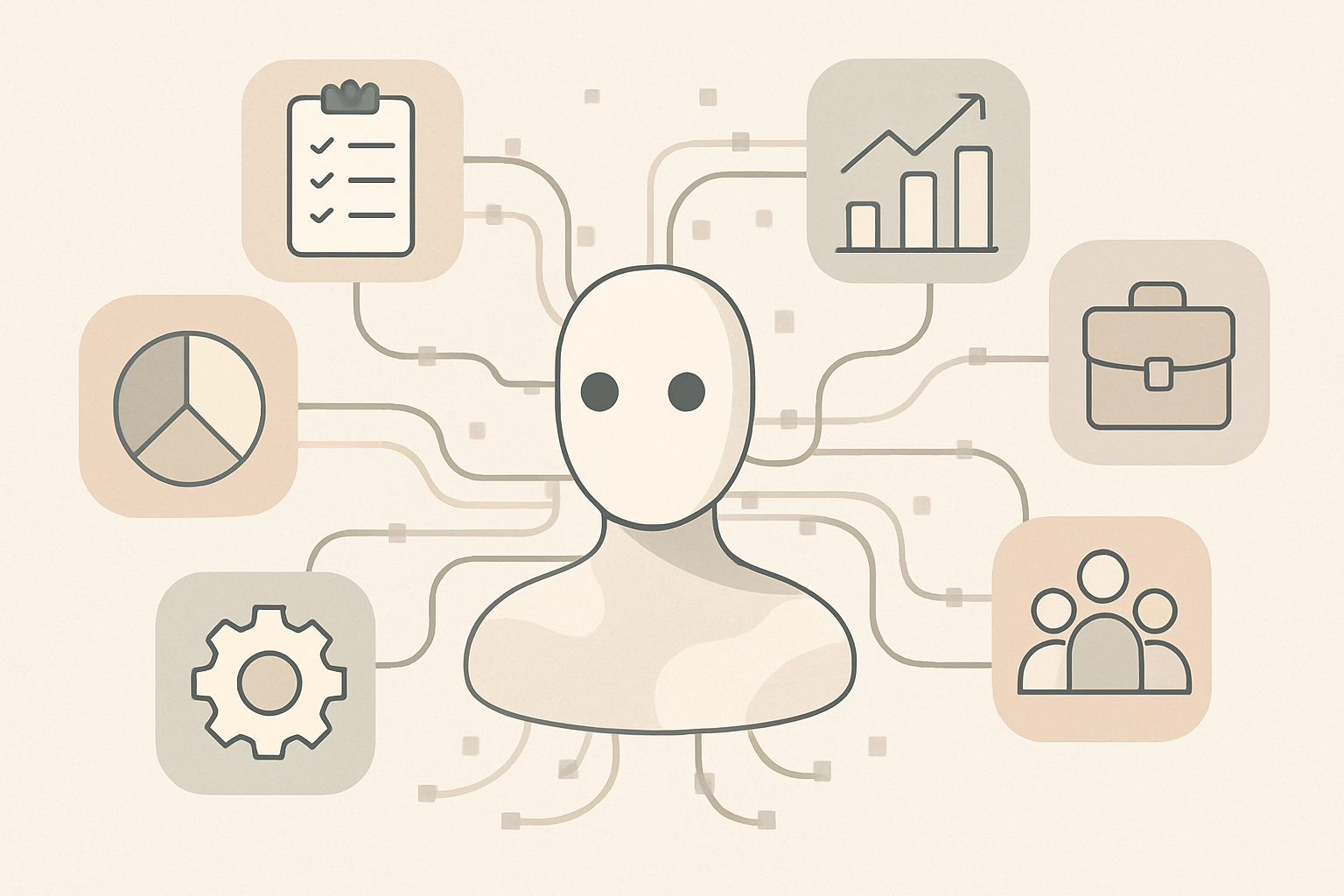
AI-powered workflow automation can be custom-built or implemented via leading SaaS solutions. Seamless integrations with CRM, ERP, and other systems create a connected digital ecosystem, where AI agents become part of daily operations. {{IMAGE_N}}
Global Trends in AI-Powered Business Process Automation
Looking ahead to 2026, business process automation with AI is driving transformation across industries. Organizations in the US, UK, and EU are adopting AI agents for real-time data processing, automating customer support, and delivering personalized marketing. Gartner and McKinsey report productivity gains of 20–35% from integrating AI automation into finance, logistics, and manufacturing.
SMEs are increasingly leveraging intelligent automation to streamline operations, accelerate lead handling, improve inventory management, and automate financial reporting. Platforms like Salesforce, HubSpot, SAP, Oracle, and Microsoft Dynamics make it easier to implement tailored automation without disrupting existing processes. This integration is especially valued by service-oriented and export-focused companies, where continuity is critical.
Growing Demand for AI Automation Among SMEs
Small and medium-sized businesses are embracing AI business process automation to boost speed and reduce costs, often achieving 15–25% savings. The main driver: customizable solutions that fit sector-specific needs. AI agents now routinely analyze customer inquiries, automate lead segmentation, and optimize spend—making AI automation a key competitive lever.
US and UK businesses increasingly seek examples of AI automation in business beyond basic chatbots. From automating onboarding and customer support with Zendesk and Dialogflow, to leveraging AI-powered outreach and supply chain optimization, the focus is on practical, ROI-driven outcomes. The question of how to automate business processes with AI is now a boardroom priority.
7 Business Processes Your Competitors Are Already Automating with AI
Here are seven core business operations where leading companies are leveraging AI-powered automation to boost efficiency and streamline workflows:
- Lead Management & Qualification: AI agents in CRMs like Salesforce or HubSpot automatically qualify leads, assign them to sales reps, and initiate outreach, cutting response times from hours to minutes and improving conversion rates.
- AI-Powered Customer Support: Chatbots and virtual assistants, embedded in platforms like Zendesk or built with Dialogflow, now resolve up to 80% of customer inquiries without human intervention.
- Marketing Automation: AI models personalize email campaigns, segment customers, and optimize ad spend in real time, leading to higher conversion rates and reduced analytics overhead.
- AI in Financial Management: Automated financial reporting, anomaly detection, and smarter budget planning—AI integrates with ERP and accounting systems such as SAP, QuickBooks, or NetSuite, freeing finance teams from manual reconciliations.
- Document & Contract Processing: AI-driven tools extract and archive data from contracts and documents, pushing key information into your CRM or ERP for faster compliance and fewer errors.
- Supply Chain Optimization: AI forecasts demand, automates inventory updates, and optimizes order workflows—vital for retailers and distributors aiming for just-in-time stock levels.
- HR Automation & Onboarding: AI tools screen applicants, automate communication, and coordinate onboarding and training, helping new hires reach productivity faster and reducing HR admin.
These AI automation solutions are becoming baseline expectations for growth-oriented businesses.
Real-World Examples of AI Business Process Automation
Let’s look at real-world case studies from logistics, retail, SaaS, and B2B services:
In 2023, Synvolve Solutions delivered a custom AI agent for a leading Eastern European logistics firm, integrated with Salesforce CRM. This cut average response time from 40 minutes to just 7, and boosted Net Promoter Score (NPS) by 19%. A major Eastern European retailer used AI-driven analytics for inventory control in their ERP, reducing unsold stock by 28% and shrinking order processing from 4 hours to 20 minutes.
In the US, a SaaS provider deployed an AI-powered customer support module, lowering support costs by 35% and improving customer retention by 11%. In the UK, a B2B company used intelligent automation for contract approvals, cutting lead time from nine days to two and increasing throughput by 25%.
Key Performance Metrics
| Company / Sector | AI Integration | Automation Outcomes | Implementation Time |
|---|---|---|---|
| Logistics (Eastern Europe) | AI agent in CRM | 33 min faster response, +19% NPS | 6 weeks |
| Retail (Eastern Europe) | ERP + AI analytics | 28% less unsold inventory, 85% faster order creation | 8 weeks |
| SaaS Platform (USA) | AI-driven customer support | 35% lower costs, +11% retention | 5 weeks |
| B2B Services (UK) | AI contract automation | 7 days off lead time, +25% throughput | 7 weeks |
Across these examples, companies saw ROI from 120% to 260% in the first year. The main gains: significant time savings, lower expenses, and higher service quality. SMBs can see benefits from AI-powered workflow automation in as little as 6–8 weeks. {{IMAGE_N}}
Key Benefits of AI Automation for Small and Medium-Sized Businesses
Implementing business process automation with AI delivers real advantages for SMEs and SMBs. AI-powered automation can reduce staffing costs by up to 30% by handling repetitive, rule-based tasks. Instead of hiring more staff, you can use intelligent automation to process more orders or inquiries without sacrificing quality.
Custom AI automation solutions are tailored to your workflows. You can automate invoice generation, streamline integrations with CRMs and ERPs like Salesforce, HubSpot, or Microsoft Dynamics, or connect with industry-specific platforms. Bespoke systems mean you only implement features critical to your business.
AI-powered workflow automation also improves customer service—AI agents deliver instant responses, personalize interactions, and suggest relevant solutions, bringing response times down to minutes and boosting satisfaction and retention.
In summary, AI business process automation empowers small and medium businesses to:
- Achieve significant cost savings
- Scale processes without extra hires
- Deliver faster, more personalized customer support
- Implement only the automation you need, avoiding unnecessary spend
Common Pitfalls and Challenges in Implementing AI-Powered Automation
Despite the benefits, rolling out business process automation with AI has its challenges:
- Automating Low-Impact Processes: Automating minor workflows rarely delivers meaningful ROI. Prioritize processes that impact revenue, cost, or customer satisfaction.
- Lack of Clear KPIs: Without defined metrics, it’s hard to gauge the impact of intelligent automation. Set 2–3 key KPIs before starting.
- Integration Gaps: Many projects struggle when new tools are bolted onto legacy systems like Salesforce or SAP without proper planning. Assess your IT infrastructure and plan for seamless integration.
- Insufficient Staff Training: Even the best AI-powered workflow automation won’t deliver results if your team isn’t trained. Invest in onboarding and hands-on support.
- Underestimating Change Management: AI automation is a shift in how your business operates. Budget time and resources for change management and team adaptation.
How to Choose a Partner for Custom AI-Powered Automation
When selecting a partner for AI-powered business process automation, look for vendors with a proven track record in custom solutions. Review their portfolio—at least 10 relevant case studies in your industry or related sectors is a good benchmark. Ask about their typical MVP delivery timeline; for tailored AI automation, 6–10 weeks is realistic. Confirm they provide ongoing support to ensure your solution adapts and scales as your business evolves.
AI Automation Kickoff Checklist for Your Business
- Audit Your Core Processes
Identify 1–2 workflows with the biggest impact on your bottom line.
- Evaluate Technical Readiness
Assess your tech stack: Do you have existing integrations (e.g., Salesforce, HubSpot, SAP) or need custom development?
- Define Success Metrics (KPIs)
Set clear KPIs—reduced processing time, higher automation percentage, or measurable cost savings.
- Choose an Experienced Partner
Select a vendor with a track record in business process automation with AI for your industry.
- Launch a Minimum Viable Product (MVP)
Deploy a focused version of your AI automation solution to test with real data and users.
- Analyze Results and Iterate
Measure outcomes against KPIs and refine your AI automation solutions.
- Scale Automation Across More Processes
Once the MVP meets targets, expand intelligent automation to other workflows or locations.
Key Takeaways in Under a Minute
- Pinpoint your biggest time and resource drains. Focus on processes like lead generation, inquiry handling, accounting, document management, and customer support—these are often the first areas automated with AI.
- Choose solutions that integrate with your existing tools. Ensure your AI-powered workflow automation connects easily with platforms like Salesforce, HubSpot, SAP, Oracle, or Microsoft Dynamics.
- Launch fast with an MVP, then scale. Deploy a minimum viable solution to unlock ROI quickly, then expand as you see results.
- Customize for your industry. Intelligent automation delivers the best results when tailored to your workflows and sector.
AI automation is already setting market leaders apart. Evaluate which of your core business processes can be automated first to boost efficiency and get ahead.
Frequently Asked Questions
How to automate business processes with AI?
Start by identifying repetitive, high-impact workflows and implement AI tools that learn from data and adapt over time. Integrate these solutions with existing systems for seamless automation and continuous improvement.
What is the 30% rule in AI?
The 30% rule in AI refers to the potential for AI automation to reduce operational staffing costs by up to 30%, by automating repetitive, rule-based tasks.
Is AI replacing RPA?
AI is not fully replacing RPA (Robotic Process Automation), but enhancing it. RPA handles structured, rule-based tasks, while AI enables automation of more complex, data-driven processes.
What is process automation using AI?
Process automation using AI leverages artificial intelligence to automate not only repetitive tasks but also decision-making processes, making workflows more efficient and responsive.
Which AI tool is best for automation?
The best AI tool for automation depends on your needs, but popular options include UiPath, Automation Anywhere, and Microsoft Power Automate, all offering robust AI capabilities for automating business processes.